
Health literacy: from individual competence to organisational responsibility
Prevention, health promotion and access to quality care: understand, act, make accessible
Daniel Oberlé - Health Practices - 8 June 2026
This article is based on the resources progressively referenced in the Health Practices blog. Other publications on this subject may enrich this selection and contribute to the updating of this page. This is a synthesis work, so it is necessary to consult all the sources in the bibliography to go further. You can propose your own articles by clicking on "Contact" at the top of the page.
The list of articles on this theme in Health Practices is at the bottom of this article in the bibliography
Recognise access to understandable information as a fundamental right, and not as an option
Introduction — Why health literacy concerns everyone
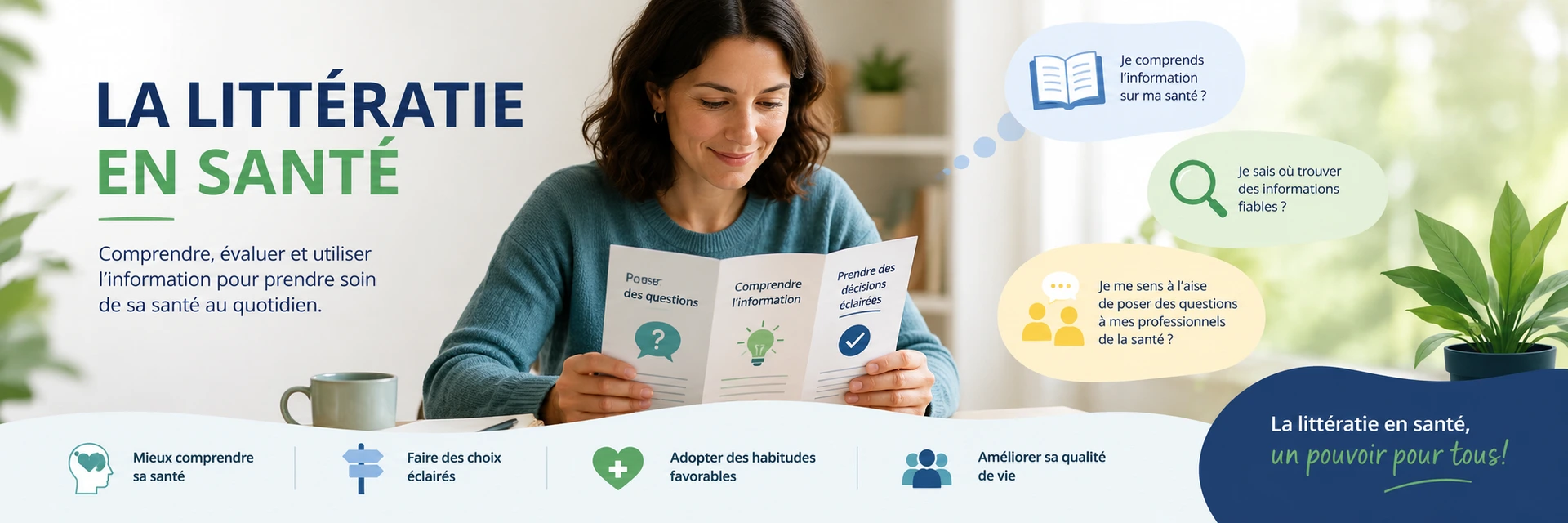
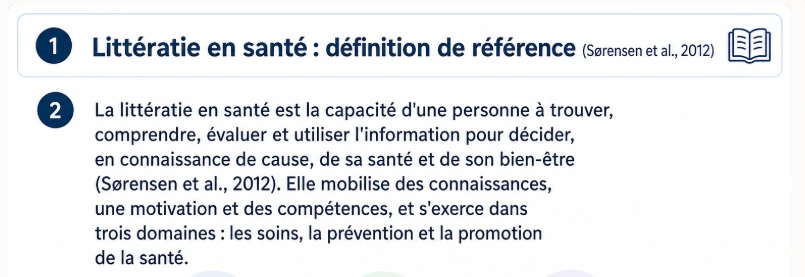
Read a medicine leaflet, choose between two tests, understand a prescription, sort through the health information circulating online, navigate between a general practitioner, a specialist and the hospital : these ordinary actions require a skill that is far from evident. Health literacy refers to a person's ability to find, understand, evaluate and use information in order to make informed decisions about their health and well-being; it therefore encompasses both knowledge, motivation and skills. The reference definition remains that proposed by Kristine Sørensen and her colleagues in 2012, which articulates four operations — accessing, understanding, evaluating, applying — under the influence of both personal and situational determinants [1]. Far from being reduced to the ability to “ read a prescription,” it constitutes a determinant of health and quality of life throughout one’s existence.
Literacy crosses the three areas of health action that this article aims to cover jointly. Prevention first: understanding screening, a vaccination schedule or a risk reduction message, and moving from information to action. Health promotion next: empowering individuals and making environments — school, work, neighbourhood — conducive to health choices. Access to quality care finally: navigating a complex system, engaging in dialogue with professionals, understanding a treatment and participating in shared decisions. In each of these areas, understanding information conditions both the effectiveness and equity of action.
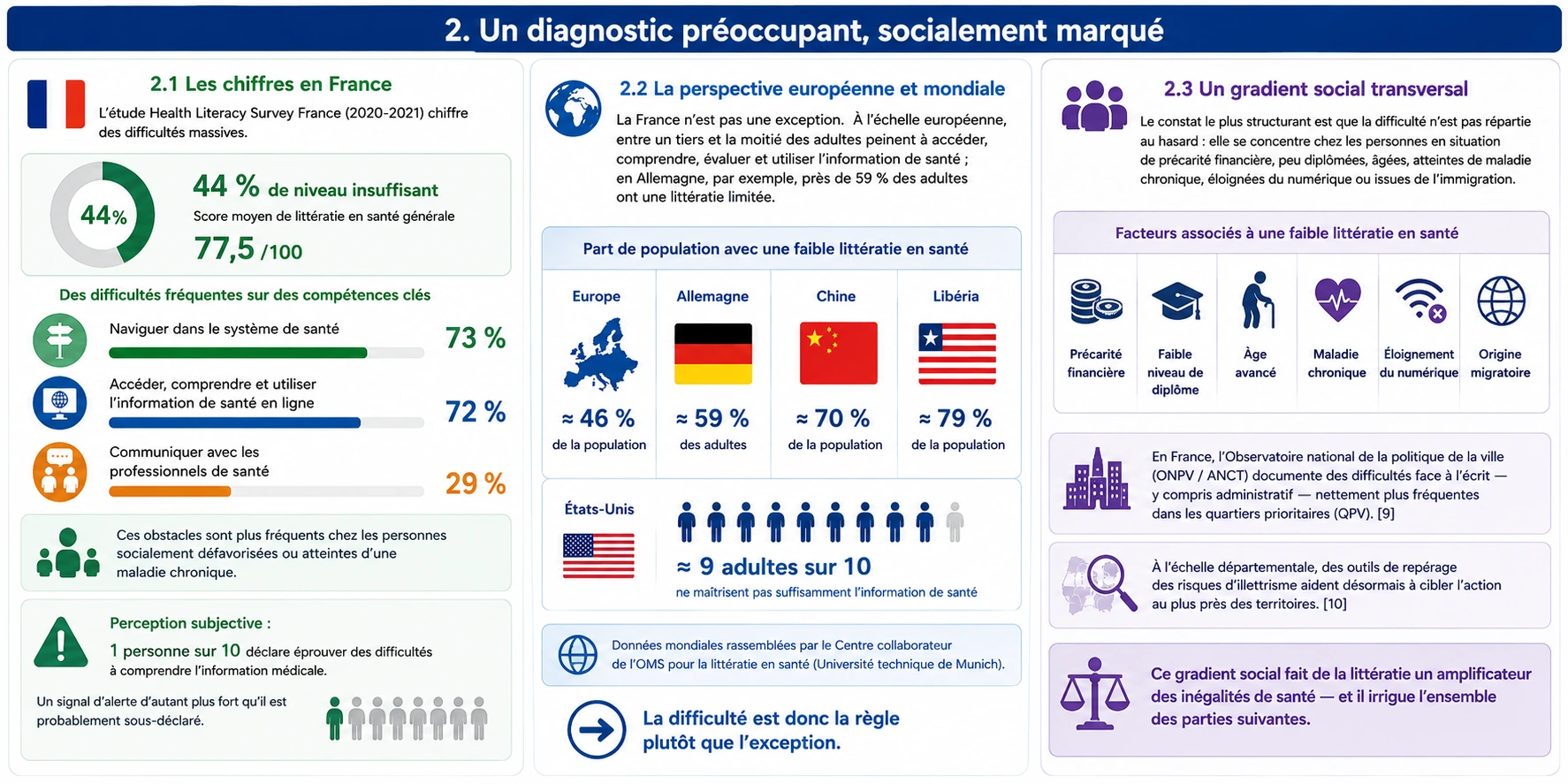
However population surveys show that a very significant share of adults are struggling: in France, 44% have an insufficient health literacy level (30% "problematic" and 14% "inadequate"), according to the European study Health Literacy Survey conducted in 2020-2021 and summarised by Santé publique France [2]. The issue is therefore not marginal: it conditions equity of access to care and increasingly explicitly relates to human rights.
The main thread of this article is as follows: to shift the problem from "individuals" to a challenge of "systems". As long as difficulties are attributed solely to the user, they are asked to adapt to a complex system; by shifting the focus towards organisations, it is reminded that it is also — and above all — the system's responsibility to be understandable.
1. Understanding health literacy: a multidimensional concept
1.1 The three levels of competencies
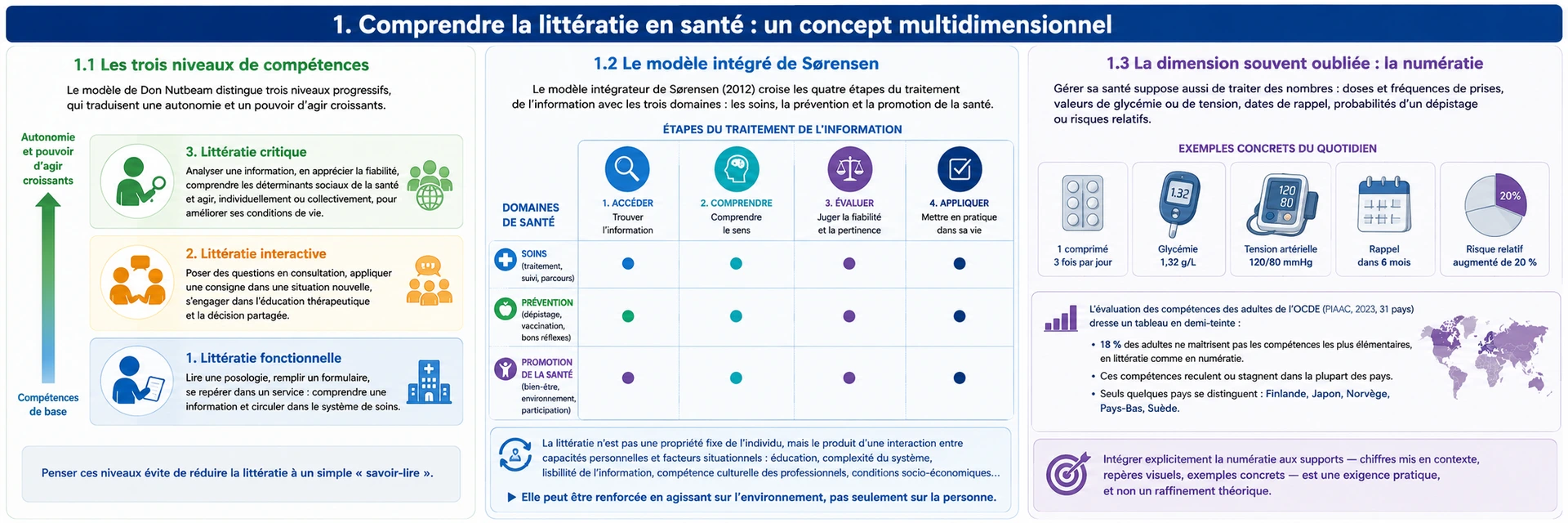
The model of Don Nutbeam, notably taken up by the Council of Europe, distinguishes three progressive levels, which reflect increasing autonomy and empowerment [3]. Functional literacy refers to basic skills — reading a dosage, filling out a form, navigating a service — that allow one to understand information and move through the healthcare system. Interactive literacy mobilises more advanced cognitive and social skills: asking questions in consultations, applying instructions in a new situation, engaging in therapeutic education and shared decision-making. Finally, critical literacy is the highest level: analysing information, assessing its reliability, understanding the social determinants of health and acting, individually or collectively, to improve one’s living conditions. Considering these levels prevents reducing literacy to a simple "knowing-how-to-read ".
1.2 The integrated model of Sørensen
The integrative model of Sørensen (2012) intersects the four stages of information processing — accessing, understanding, evaluating, applying — with the three areas mentioned earlier: care, prevention and health promotion [1][4]. This results in a fine grid, which allows for precise identification of where a person "drops out": for lack of finding the information, understanding it, judging its relevance or putting it into practice. Above all, this model emphasises that literacy is not a fixed property of the individual, but the product of an interaction between personal capabilities and situational factors: quality of education, complexity of the system, readability of the information, cultural competence of professionals, socio-economic conditions [5]. This interactional reading is decisive: it establishes the idea that literacy can be strengthened by acting on the environment, and not just on the individual.
1.3 The often forgotten dimension: numeracy
Managing one's health also involves dealing with numbers: doses and frequencies of intake, blood sugar or blood pressure values, reminder dates, probabilities of screening or relative risks. This numeracy in health remains a blind spot in information policies. The OECD's Assessment of Adult Skills (PIAAC, 2023, 31 countries) paints a mixed picture: on average, 18 % of adults do not master the most basic skills, in literacy as well as in numeracy, and these skills are declining or stagnating in most countries; only a few stand out (Finland, Japan, Norway, Netherlands, Sweden) [6]. Explicitly integrating numeracy into materials — numbers put into context, visual cues, concrete examples — is therefore a practical requirement, not a theoretical refinement.
2. A concerning diagnosis, socially marked
2.1 The figures in France
The study Health Literacy Survey France (2020-2021) quantifies massive difficulties. Beyond the 44% of insufficient level, the average score of general health literacy is set at 77.5 out of 100, but this average masks specific pitfalls: 73% of adults encounter difficulties navigating the healthcare system, 72% in accessing, understanding and using online health information, and 29% in communicating with healthcare professionals [2]. These obstacles are more frequent among socially disadvantaged individuals or those with a chronic illness. The subjective perception confirms the survey: one in ten reports having difficulties understanding medical information, a warning signal all the more significant as it is likely under-reported [7].
2.2 The European and global perspective
France is not an exception. On a European scale, between one third and half of adults struggle to access, understand, evaluate and use health information; in Germany, for example, nearly 59% of adults have limited literacy [3]. Global data gathered by the WHO Collaborating Centre for Health Literacy (Technical University of Munich) confirm the extent of the phenomenon: about 46% of the european population, 70% in China and 79% in Liberia have low health literacy; in the United States, nearly nine out of ten adults do not sufficiently master health information [8]. Difficulty is therefore the rule rather than the exception.
2.3 A transversal social gradient
The most structuring observation is that difficulty is not randomly distributed: it is concentrated among people in situations of financial precariousness, with low qualifications, elderly, affected by chronic illness, distanced from digital technology or from immigration backgrounds. In France, the National Observatory of Urban Policy (ONPV / ANCT) documents difficulties with writing — including administrative — that are significantly more frequent in priority neighbourhoods (QPV) [9]; at the departmental level, tools for identifying the risks of illiteracy now help to target action as closely as possible to the territories [10]. This social gradient makes literacy an amplifier of health inequalities — and it permeates all the following sections.
3. A public health issue… and a cost
3.1 Health and social consequences
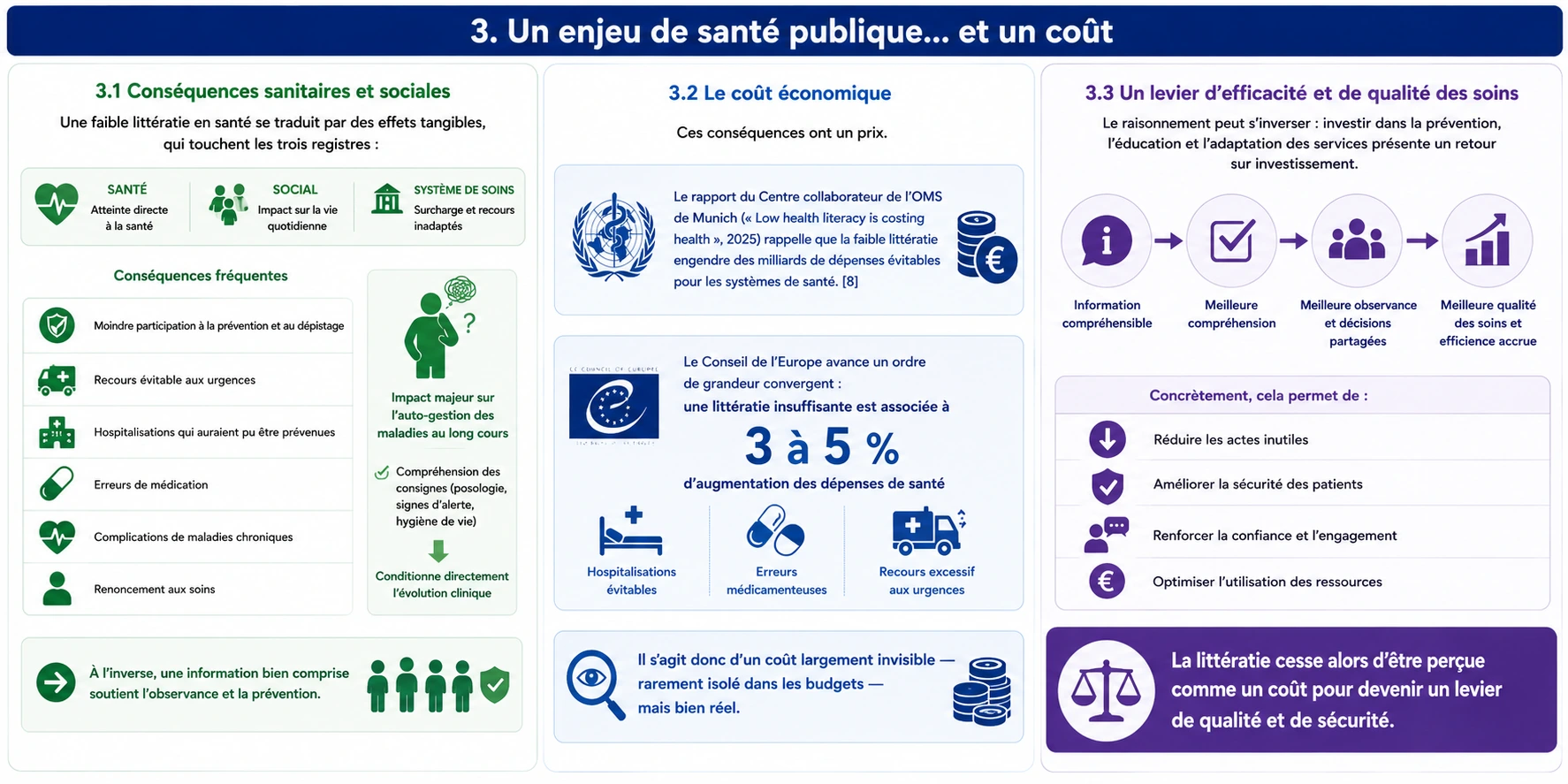
A low health literacy results in tangible effects, which impact the three areas: lower participation in prevention and screening, avoidable use of emergency services, hospitalisations that could have been prevented, medication errors, complications of chronic diseases, forgoing care. It particularly weighs on the self-management of long-term illnesses, where understanding instructions — dosage, warning signs, lifestyle — directly conditions clinical outcomes. Conversely, well-understood information supports adherence and prevention.
3.2 The economic cost
These consequences come at a price. The report from the WHO Collaborating Centre in Munich (“Low health literacy is costing health”, 2025) reminds us that low literacy leads to billions in avoidable expenditures for health systems [8]. The Council of Europe provides a converging order of magnitude: insufficient literacy is associated with a 3 to 5% increase in health expenditures, due to avoidable hospitalisations, medication errors and excessive use of emergency services [3]. This is therefore a largely invisible cost — rarely isolated in budgets — but very real.
3.3 A lever for efficiency and quality of care
The reasoning can be reversed: investing in prevention, education and the adaptation of services presents a return on investment. Making information understandable means reducing unnecessary actions, improving adherence and the quality of shared decisions, and thus enhancing both the quality of care and the efficiency of the system. Literacy then ceases to be perceived as a cost and becomes a lever for quality and safety.
4. Changing the paradigm: from the individual to organisations (Organizational Health Literacy)
4.1 The limits of an individual-centred approach
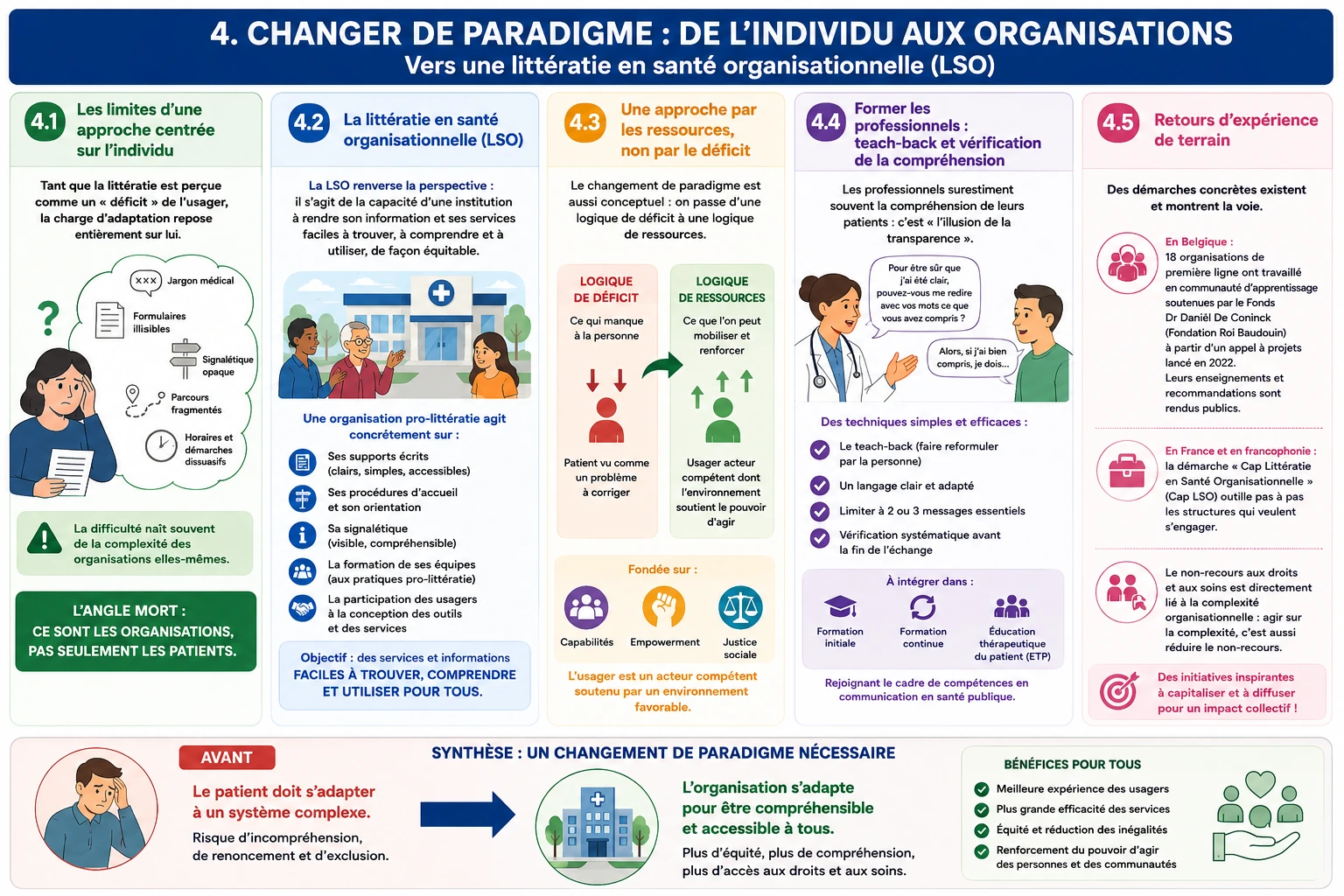
As long as literacy is viewed as a “deficit” of the user, the burden of adaptation rests entirely on them — and it is already vulnerable individuals who pay the price. However, the difficulty often arises from the complexity of the organisations themselves: medical jargon, unreadable forms, opaque signage, fragmented pathways, discouraging hours and processes. The blind spot is the organisations, not just the patients.
4.2 Organisational health literacy
The literacy in organisational health (LOH) reverses the perspective : it is the ability of an institution to make its information and services easy to find, understand and use, in an equitable manner. A “pro-literacy organisation” actively works on its written materials, its reception procedures, its signage, the training of its teams and the involvement of users in the design of tools — this is the idea summarised by the phrase “when organisations want to make a difference” [11].
4.3 A resource-based approach, not a deficit approach
The paradigm shift is also conceptual: it moves from a deficit logic (what is lacking for the person) to a logic of resources (what can be mobilised and strengthened). This approach, based on capabilities, empowerment and social justice, views the user as a competent actor whose environment should support their ability to act — rather than as a problem to be corrected.
4.4 Training professionals: teach-back and understanding verification
Professionals frequently overestimate their patients’ understanding — this is “the illusion of transparency”. Simple techniques correct this bias: teach-back (having the person rephrase what they have understood), using clear language, limiting to two or three essential messages, and systematic verification before the end of the exchange. The connection with therapeutic patient education (TPE) extends this logic in chronic illnesses. Training in pro-literacy practices, which aligns with the framework of competencies in public health communication, would benefit from being included in initial curricula as well as in continuing education, including for healthcare providers and social workers [12].
4.5 Field Experience Feedback
Concrete approaches exist. In Belgium, eighteen frontline organisations, supported by the Dr Daniël De Coninck Fund (King Baudouin Foundation), have worked in a learning community to develop their organisational literacy, based on a call for projects launched in 2022; their lessons and recommendations are made public to be capitalised by other actors [13]. In France and in Francophonie, the approach "Cap Health Organisational Literacy" (Cap LSO) gradually equips the structures that wish to engage [14]. Finally, the issue of non-access to rights and care directly relates to this organisational project: tackling complexity also means reducing non-access [15].
5. Leave no one behind: accessibility and vulnerable groups
5.1 Accessibility as a universal principle
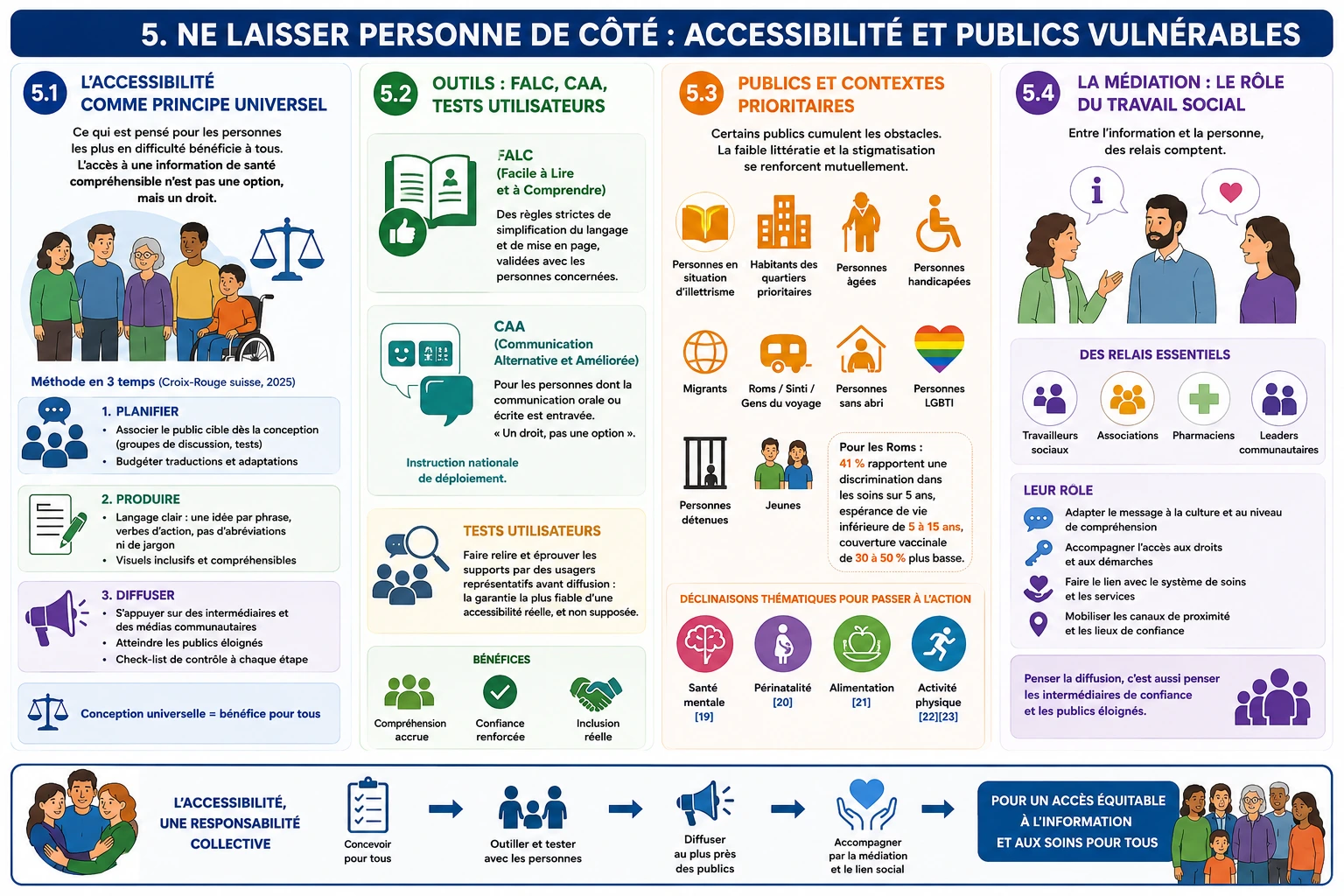
Making information accessible falls under universal design: what is designed for the most disadvantaged benefits all of the population. Access to understandable health information is not an option, but a right. The guide from the Swiss Red Cross (migesplus / Federal Office of Public Health, 2025) proposes a three-step method. Plan: engage the target audience from the outset (focus groups, tests) and budget for translations and adaptations. Produce: use clear language (one idea per sentence, action verbs, abandon abbreviations and jargon) and inclusive visuals. Disseminate: rely on intermediaries and community media to reach remote audiences, with a checklist at each stage [16].
5.2 Tools: Easy-to-Read, AAC, user testing
Several tools equip this accessibility. Easy to Read and Understand (FALC) is based on strict rules for clarifying language and layout, validated with the people concerned. Alternative and Augmentative Communication (AAC), now supported by a national deployment instruction, is aimed at people whose oral or written communication is hindered: it is "a right, not an option" [17][18]. In all cases, the user test — having the materials reviewed and tested by representative users before dissemination — remains the most reliable guarantee of real accessibility, and not assumed.
5.3 Priority Audiences and Contexts
Some audiences face multiple obstacles: people in situations of illiteracy, residents of priority neighbourhoods, elderly people, disabled people, migrants. The Council of Europe identifies eight particularly exposed groups — Roma / Sinti / Travellers, homeless people, disabled people, migrants, LGBTI people, detainees, elderly people, young people — for whom low literacy and stigma reinforce each other; for Roma, for example, 41% report experiencing discrimination in healthcare over five years, with a life expectancy lower by 5 to 15 years and a vaccination coverage 30 to 50% lower [3]. Thematic variations help to take action: mental health literacy [19], perinatal literacy, with dedicated educational guides [20], food literacy [21] and physical literacy [22][23].
5.4 Mediation: the Role of Social Work
Between information and the person, intermediaries matter. Social workers, associations, pharmacists, and community leaders play a mediating role: adapting the message, supporting access to rights, linking with the healthcare system. Thinking about dissemination also means considering trusted intermediaries and local channels, close to distant audiences [16].
6. The digital challenge: infodemic, disinformation and critical thinking
6.1 Infodemic and misinformation
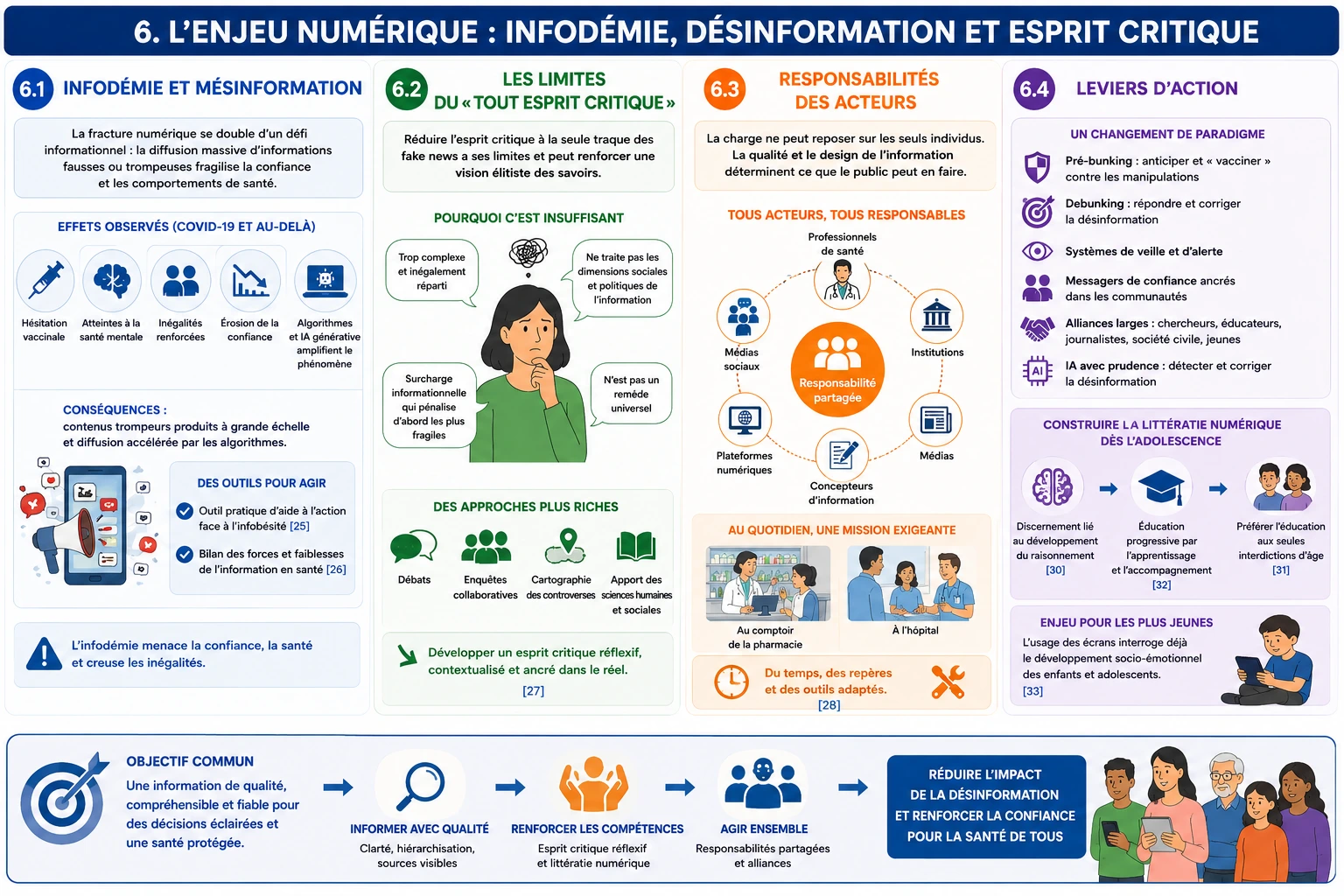
The digital divide, already noted among vulnerable audiences, is compounded by an informational challenge. In an editorial in the European Journal of Public Health (del Rey Puech, Azzopardi Muscat, Marchandise, McKee, 2026), relayed by the UNESCO Chair "Education & Health", the authors call for renewed mobilization in the face of the "infodemic": the massive dissemination of false or misleading information that undermines trust and health behaviours [24]. The COVID-19 pandemic has shown the deleterious effects of misinformation — vaccine hesitancy, mental health issues, exacerbation of inequalities, erosion of trust in scientific institutions — which recommendation algorithms and generative AI further amplify, facilitating the large-scale production of misleading content. For field actors, Pratiques en Santé has designed a practical tool to aid action against infobesity [25], and the assessment of the strengths and weaknesses of health information highlights areas for improvement [26].
6.2 The limits of "critical thinking"
The reflex of opposing "critical thinking" to misinformation has its limits. A research report on the conceptions of critical thinking in the educational field shows that reducing it to merely tracking fake news — as some institutional reports and recent laws have encouraged — neglects the social and political dimensions of information and can reinforce an elitist view of knowledge; the authors advocate for reflective approaches (debates, collaborative inquiries, mapping of controversies) and the contribution of the humanities and social sciences [27]. As skills are unevenly distributed, the information overload weighs primarily on the most vulnerable audiences: critical thinking is not a universal remedy.
6.3 Responsibilities of stakeholders
The burden cannot rest solely on individuals. Professionals, institutions, platforms, media and information designers bear a responsibility: the quality and design of information (clarity, hierarchy, visible sources) largely determine what the public can make of it. At the pharmacy counter as well as in the hospital, combating misinformation remains a demanding mission, which requires time, reference points and suitable tools [28].
6.4 Levers of action
The authors advocate for a paradigm shift: proactive pre-bunking strategies (anticipating and "vaccinating" against manipulations) and debunking, monitoring systems, identification of trusted messengers rooted in communities, and broad alliances involving researchers, educators, journalists, civil society, and younger generations [24]. Artificial intelligence can itself be mobilised, with caution, to detect and correct misinformation [29]. Finally, digital literacy is built from adolescence: the discernment of the veracity of information being linked to the development of reasoning [30], it is better to have progressive education — through learning and support [32] — than mere age restrictions [31], especially when the use of screens already questions the socio-emotional development of the youngest [33].
7. Political levers: towards systems favourable to literacy
7.1 What national plans reveal
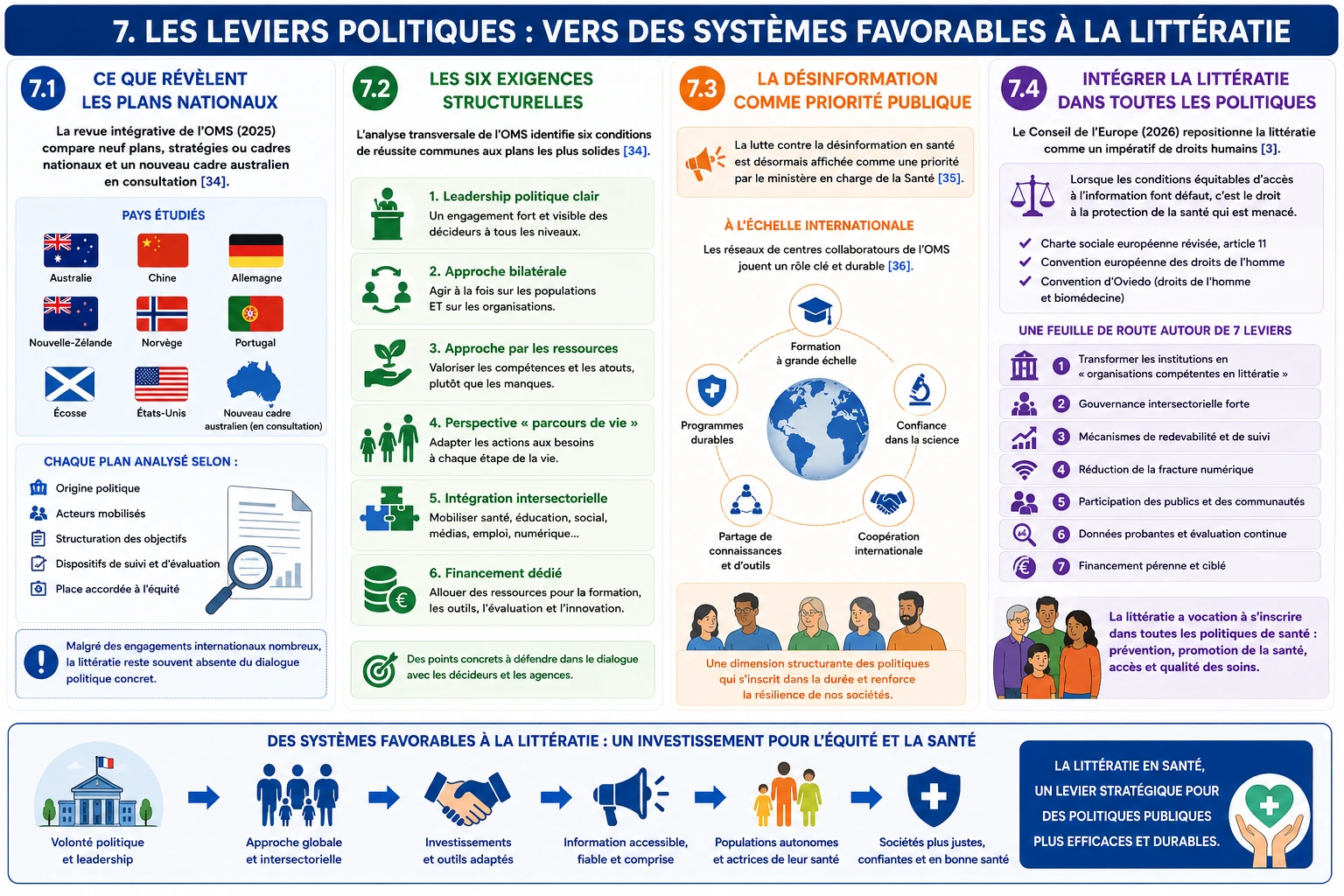
The integrative review published by the WHO in 2025 (under the direction of Kristine Sørensen) compares nine national plans, strategies, or frameworks — Australia, China, Germany, New Zealand, Norway, Portugal, Scotland, the United States, plus a new Australian framework under consultation [34]. It describes for each country the political origin, the actors involved, the structuring of the objectives, the monitoring mechanisms, and the emphasis on equity, and shows that, despite numerous international commitments, literacy is often absent from concrete political dialogue.
7.2 The six structural requirements
The cross-sectional analysis reveals six common success conditions for the most robust plans: clear political leadership; a bilateral approach acting on both populations and organisations; a resource-based approach rather than a deficit-based one; a life-course perspective; intersectoral integration (health, education, social, media); and dedicated funding for training, tools, and evaluation [34]. These are concrete points to advocate for in dialogue with decision-makers and agencies.
7.3 Misinformation as a public priority
The fight against health misinformation is now stated as a priority by the Ministry of Health [35]. At the international level, the role of the WHO collaborating centre networks — sustainable programmes, large-scale training, trust in science — illustrates the structuring dimension of these policies and their long-term anchoring [36].
7.4 Integrating literacy into all policies
The Council of Europe (2026) takes a further step by repositioning literacy as a human rights imperative: when fair conditions for access to information are lacking, it is the right to health protection (revised European Social Charter, article 11; European Convention on Human Rights; Oviedo Convention) that is threatened [3]. The report proposes a roadmap for the 46 member states, articulated around seven levers — including the transformation of institutions into "literacy competent organisations", intersectoral governance, accountability mechanisms, and the reduction of the digital divide. Literacy is thus intended to be integrated into all health policies: prevention, health promotion, access, and quality of care.
8. Taking action: concrete guidelines for field actors
8.1 Measuring and understanding needs
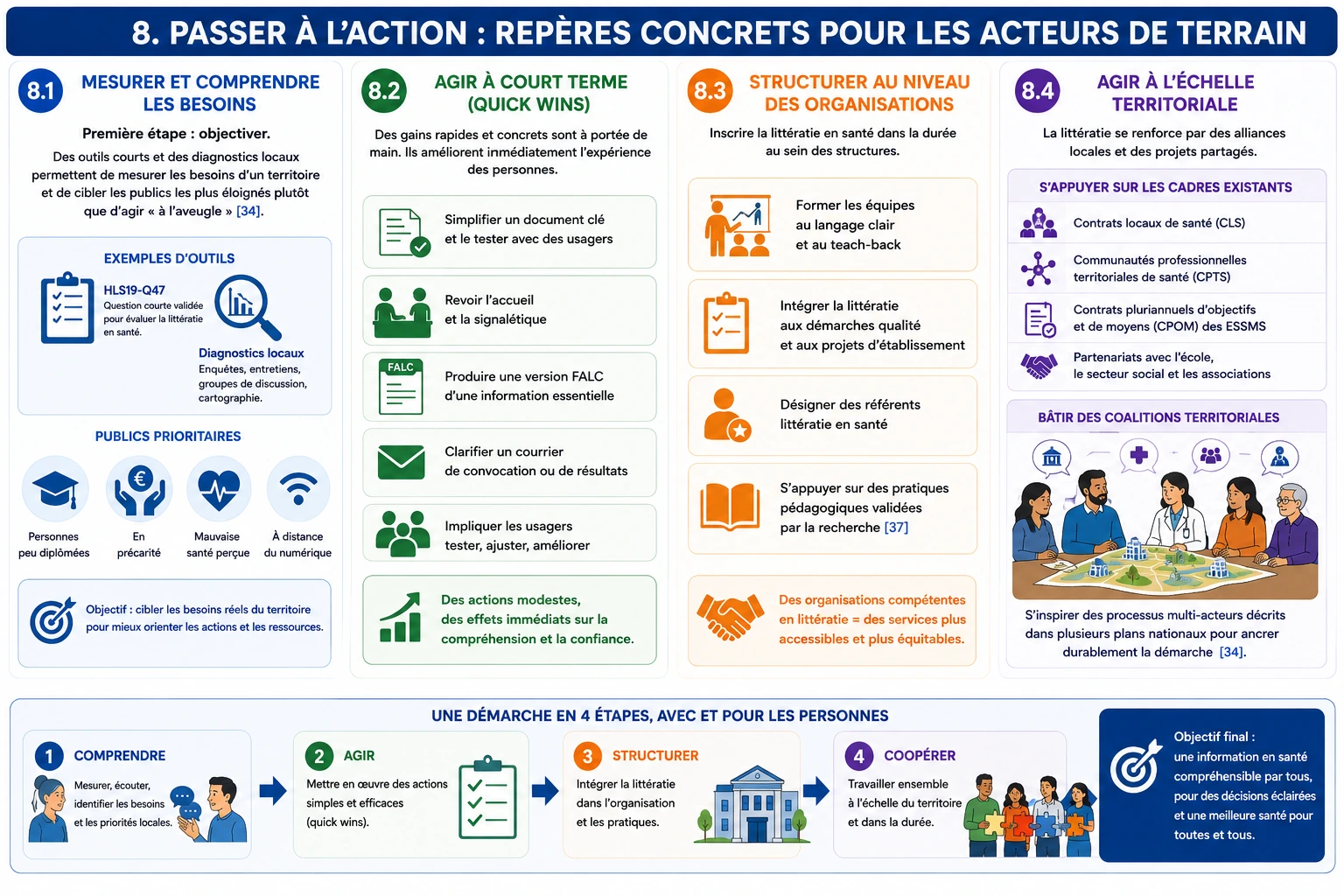
First reflex: objectify. Short tools (for example, the item HLS19-Q47) and local diagnostics allow for measuring the needs of a territory and targeting the most distant populations — people with low qualifications, in precarious situations, in perceived poor health, or distanced from digital technology — rather than acting "blindly" [34].
8.2 Writing a key document in collaboration with the target audience
Quick wins are within reach: simplify a key document and test it with users, review the reception and signage, produce a plain language version of essential information, clarify a summons or results letter. These modest actions immediately improve the experience of individuals, in both prevention and care.
8.3 Structuring at the organisational level
Ensuring that health literacy is an essential criterion for the certification of the quality of services offered by an organisation. : training teams in plain language and teach-back, integrating literacy into quality approaches and establishment projects, designating referents, relying on pedagogical practices validated by research [37].
8.4 Acting at the territorial level
Finally, health literacy benefits from being supported by local contracts and coalitions: local health contracts (CLS), territorial health professional communities (CPTS), multi-year objectives and means contracts (CPOM) of ESSMS, partnerships with schools, the social sector and associations. Building territorial coalitions, based on the model of multi-actor processes described in several national plans, firmly anchors the approach [34].
Conclusion — Literacy, equity and human rights
Health literacy is a modifiable social determinant: we can act on it, provided we stop treating it as a purely individual matter. Whether it is about prevention, health promotion or access to quality care, it falls under a shared responsibility between governments, health systems, educational institutions and civil society [3][34]. As international organisations — WHO, Council of Europe — link it to human rights [8], it joins the fight against stigmatisation and discrimination, in line with the values promoted by Health Practices: literacy, empowerment, community health, ethics, human rights and intersectorality.
With equal user competence, the health gap between two populations is due to the responsibility of organisations. It is therefore up to them to adapt, not for patients to manage on their own.
Bibliography
The numbers correspond to the reference calls in brackets in the text. For each entry, the original source document is indicated, followed by the published decoding article by Pratiques en Santé.
[1] Sørensen K. et al. (2012), integrated definition of health literacy ; WHO, information sheet "Health literacy" — https://www.who.int/news-room/fact-sheets/detail/health-literacy
[2] Public Health France — Health literacy: key figures from the Health Literacy Survey France study (2020-2021); Pratiques en Santé, "Key figures from the HLS study in France" — https://www.santepubliquefrance.fr/docs/litteratie-en-sante.-les-chiffres-cles-de-l-etude-health-literacy-survey-hls-en-france · https://pratiquesensante.odoo.com/blog/etudes-5/litteratie-en-sante-les-chiffres-cles-de-l-etude-health-literacy-survey-hls-en-france-rapport-et-inforgraphie-3687
[3] Council of Europe (2026), K. Sørensen — "Promoting health literacy and human rights to reduce stigma and discrimination"; Pratiques en Santé, "Promoting health literacy and human rights…" — https://rm.coe.int/promoting-health-literacy-and-human-rights-to-reduce-stigma-and-discri/48802aeace · https://pratiquesensante.odoo.com/blog/pratiques-15/promouvoir-la-litteratie-en-sante-et-les-droits-humains-pour-reduire-la-stigmatisation-et-la-discrimination-5762
[4] Pratiques en Santé — "Conceptual document on health literacy" — https://pratiquesensante.odoo.com/blog/pratiques-15/document-conceptuel-sur-la-litteratie-en-sante-3193
[5] Pratiques en Santé — "What is health literacy?" — https://pratiquesensante.odoo.com/blog/pratiques-15/quest-ce-que-la-litteratie-en-sante-1608
[6] OECD — Assessment of adult skills (PIAAC 2023); Pratiques en Santé, "Adult skills in literacy and numeracy are declining or stagnating in most OECD countries" — https://www.oecd.org/fr/publications/les-adultes-possedent-ils-les-competences-necessaires-pour-s-epanouir-dans-un-monde-en-mutation_e8d52c02-fr.html · https://pratiquesensante.odoo.com/blog/etudes-5/les-competences-des-adultes-en-litteratie-et-en-numeratie-reculent-ou-stagnent-dans-la-plupart-des-pays-de-locde-4310
[7] Pratiques en Santé — "One in ten people has difficulty understanding medical information" — https://pratiquesensante.odoo.com/blog/etudes-5/une-personne-sur-dix-eprouve-des-difficultes-de-comprehension-de-linformation-medicale-2484
[8] WHO, Collaborating Centre for Health Literacy (Technical University of Munich, 2025) — "Low health literacy is costing health"; Pratiques en Santé, "The low level of health literacy has a cost" — https://www.who.int/publications/i/item/B09619 · https://pratiquesensante.odoo.com/blog/pratiques-15/le-faible-niveau-de-litteratie-en-sante-a-un-cout-5495
[9] National Observatory of Urban Policy / ANCT (F. Simonnet, 2024) ; Health Practices, "Understanding difficulties with writing more frequently faced in priority neighbourhoods of urban policy" — https://pratiquesensante.odoo.com/blog/pratiques-15/comprendre-des-difficultes-face-a-lecrit-plus-frequentes-dans-les-quartiers-prioritaires-de-la-politique-de-la-ville-5672
[10] Health Practices — "100 departmental sheets to locate the risks of illiteracy and target action" — https://pratiquesensante.odoo.com/blog/pratiques-15/100-fiches-departementales-pour-localiser-les-risques-dillettrisme-et-cibler-laction-5838
[11] Health Practices — "Health literacy: when organisations want to make a difference" — https://pratiquesensante.odoo.com/blog/pratiques-15/litteratie-en-sante-quand-les-organisations-veulent-faire-la-difference-4077
[12] Health Practices — "The Framework of Competencies in Public Health Communication: results of a multimethod research process and consensus" — https://pratiquesensante.odoo.com/blog/pratiques-15/le-cadre-de-competences-en-communication-en-sante-publique-resultats-dun-processus-de-recherche-multimethode-et-de-consensus-5443
[13] King Baudouin Foundation / Dr Daniël De Coninck Fund (2024) ; Health Practices, "Organisational health literacy in the frontline: lessons from 18 pioneering organisations (Belgium)" — https://kbs-frb.be/fr/litteratie-en-sante-organisationnelle-dans-la-1ere-ligne-les-enseignements-de-18-organisations · https://pratiquesensante.odoo.com/blog/pratiques-15/litteratie-en-sante-organisationnelle-dans-la-1ere-ligne-les-enseignements-de-18-organisations-pionnieres-belgique-3908
[14] Health Practices — "Health Organisational Literacy Initiative (Cap LSO)" — https://pratiquesensante.odoo.com/blog/outils-6/cap-litteratie-en-sante-organisationnelle-cap-lso-4683
[15] Health Practices — "Resource selection: Non-utilisation & organisational literacy" — https://pratiquesensante.odoo.com/blog/outils-6/selection-de-ressources-non-recours-litteratie-organisationnelle-5109
[16] Swiss Red Cross / migesplus / Federal Office of Public Health (2025) — Guide "For accessible and easy-to-understand health information" ; Health Practices — https://www.prevention.ch/files/publicimages/Documentation/SRK_BAG_Leitfaden_FR_online.pdf · https://pratiquesensante.odoo.com/blog/pratiques-15/pour-des-informations-sur-la-sante-accessibles-et-faciles-a-comprendre-5485
[17] Health Practices — "Alternative and Augmentative Communication (AAC): a right, not an option!" — https://pratiquesensante.odoo.com/blog/outils-6/la-communication-alternative-et-amelioree-caa-un-droit-pas-une-option-5646
[18] Health Practices — "Publication of an instruction for the deployment of AAC (Alternative and Augmentative Communication)" — https://pratiquesensante.odoo.com/blog/loi-11/publication-dune-instruction-pour-le-deploiement-de-la-caa-communication-alternative-et-amelioree-5050
[19] Practices in Health — "Mental health literacy" — https://pratiquesensante.odoo.com/blog/pratiques-15/litteratie-en-sante-mentale-4291
[20] Practices in Health — "Pedagogical guide on health literacy in perinatality to take action" — https://pratiquesensante.odoo.com/blog/outils-6/guide-pedagogique-sur-la-litteratie-en-sante-en-perinatalite-pour-passer-a-laction-4673
[21] Practices in Health — "Food literacy: 4 essential skills to develop in primary school students" — https://pratiquesensante.odoo.com/blog/pratiques-15/litteratie-alimentaire-4-competences-essentielles-a-developper-chez-les-eleves-du-primaire-5119
[22] Practices in Health — "Physical literacy in Physical Education (PE), the prose of Monsieur Jourdain" — https://pratiquesensante.odoo.com/blog/outils-6/la-litteratie-physique-en-education-physique-ep-la-prose-de-monsieur-jourdain-5510
[23] Practices in Health — "Developing physical literacy, towards a new norm for all Canadians" — https://pratiquesensante.odoo.com/blog/etudes-5/developper-la-litteratie-physique-vers-une-nouvelle-norme-pour-tous-les-canadiens-669
[24] Editorial of the European Journal of Public Health (2026 ; del Rey Puech, Azzopardi Muscat, Marchandise, McKee), via the UNESCO Chair "Education & Health"; Practices in Health, "Rethinking communication in public health in the face of infodemic" — https://chaireunesco-es.org/2026/01/21/repenser-la-communication-en-sante-publique-face-a-linfodemie/ · https://pratiquesensante.odoo.com/blog/pratiques-15/repenser-la-communication-en-sante-publique-face-a-linfodemie-5576
[25] Practices in Health — "Facing infobesity — @Practices in Health — A concrete tool for action in health-social" — https://pratiquesensante.odoo.com/blog/annonces-28/face-a-linfobesite-pratiques-en-sante-un-outil-concret-pour-agir-en-sante-social-5457
[26] Practices in Health — "Health information — Assessment of strengths and weaknesses" — https://pratiquesensante.odoo.com/blog/etudes-5/information-en-sante-bilan-des-forces-et-des-faiblesses-5526
[27] Practices in Health — "Concepts of critical thinking in the educational field: the limits of a "cure for misinformation"" — https://pratiquesensante.odoo.com/blog/pratiques-15/conceptions-de-lesprit-critique-dans-le-domaine-educatif-les-limites-dun-remede-a-la-desinformation-5343
[28] Practices in Health — "Fighting misinformation at the counter, impossible mission?" — https://pratiquesensante.odoo.com/blog/pratiques-15/lutter-contre-la-desinformation-au-comptoir-mission-impossible-5330
[29] Practices in Health — "Artificial intelligence and digital technologies against misinformation about health" — https://pratiquesensante.odoo.com/blog/etudes-5/intelligence-artificielle-et-technologies-numeriques-contre-la-desinformation-sur-la-sante-5323
[30] Practices in Health — "The development of discernment regarding the veracity of information and the detection of fake news is linked to the development of reasoning in adolescence" — https://pratiquesensante.odoo.com/blog/etudes-5/le-developpement-du-discernement-de-la-veracite-des-informations-et-de-la-detection-des-fake-news-est-lie-au-developpement-du-raisonnement-a-ladolescence-5810
[31] Practices in Health — "Decoding: Banning social media for under 16s, what do scientific studies tell us" — https://pratiquesensante.odoo.com/blog/pratiques-15/decryptage-interdire-les-reseaux-sociaux-aux-moins-de-16-ans-que-nous-disent-les-etudes-scientifiques-5446
[32] Practices in Health — "Teaching digital literacy. Why? How?" — https://pratiquesensante.odoo.com/blog/pratiques-15/enseigner-la-litteratie-numerique-pourquoi-comment-4059
[33] Practices in Health — "Use of electronic screens and socio-emotional problems in children: systematic review and meta-analysis of longitudinal studies" — https://pratiquesensante.odoo.com/blog/etudes-5/usage-des-ecrans-electroniques-et-problemes-socioemotionnels-chez-les-enfants-revue-systematique-et-metaanalyse-detudes-longitudinales-5673
[34] WHO (2025) — "Integrative Review of National Health Literacy Policy Blueprints as a Tool for Change toward Health Literate Systems" (K. Sørensen); Practices in Health, "Integrative review of national health literacy plans..." — https://www.who.int/publications/i/item/9789240113138 · https://pratiquesensante.odoo.com/blog/politiques-10/revue-integrative-des-plans-nationaux-de-litteratie-en-sante-comme-leviers-de-transformation-vers-des-systemes-favorables-a-la-litteratie-en-sante-5763
[35] Practices in Health — "Fighting health misinformation: a priority for the Ministry of Health" — https://pratiquesensante.odoo.com/blog/outils-6/lutte-contre-la-desinformation-en-sante-une-priorite-du-ministere-en-charge-de-la-sante-5058
[36] Practices in Health — "A network of collaborating centres for a future in better health: sustainable programmes, large-scale training and trust in science" — https://pratiquesensante.odoo.com/blog/actualites-17/un-reseau-de-centres-collaborateurs-pour-un-avenir-en-meilleure-sante-programmes-durables-formation-a-grande-echelle-et-confiance-dans-la-science-5814
[37] Practices in Health — "A boost to success! Adopting research-supported pedagogical practices in literacy" — https://pratiquesensante.odoo.com/blog/pratiques-15/coup-de-pouce-a-la-reussite-adopter-des-pratiques-pedagogiques-en-litteratie-appuyees-par-la-recherche-4476
Other resources from the selection (not cited in the text)
[38] Practices in Health — "Replay — Conference — Health literacy and human rights" — https://pratiquesensante.odoo.com/blog/etudes-5/replay-conference-la-litteratie-en-sante-et-les-droits-humains-4335
[39] Pratiques en Santé — « La littératie en santé — Dossier dans la revue Le Chaînon » — https://pratiquesensante.odoo.com/blog/pratiques-15/la-litteratie-en-sante-dossier-dans-la-revue-le-chainon-1959
[40] Pratiques en Santé — « Communiquer pour tous : les enjeux de la littératie en santé — La Santé en action, juin 2017, n°440 » — https://pratiquesensante.odoo.com/blog/etudes-5/communiquer-pour-tous-les-enjeux-de-la-litteratie-en-sante-la-sante-en-action-juin-2017-ndeg440-1626
[41] Pratiques en Santé — « La littératie en santé : destinée à l’amélioration de la santé ? » — https://pratiquesensante.odoo.com/blog/pratiques-15/la-litteratie-en-sante-destinee-a-lamelioration-de-la-sante-4078
[42] Pratiques en Santé — « Littératie en santé : conduites et gestion de soins chez les personnes ayant des compétences réduites en littératie » — https://pratiquesensante.odoo.com/blog/etudes-5/litteratie-en-sante-conduites-et-gestion-de-soins-chez-les-personnes-ayant-des-competences-reduites-en-litteratie-313
[43] Pratiques en Santé — « Publication — La promotion de la santé aujourd’hui. Pratiques sociales et partages de savoirs » — https://pratiquesensante.odoo.com/blog/annonces-28/publication-la-promotion-de-la-sante-aujourdhui-pratiques-sociales-et-partages-de-savoirs-5553
EN.B. : Chaque article est produit à partir de mon expérience de terrain, en combinant lecture critique et traitement par intelligence artificielle (Perplexity, NotebookLM et Claude). Les prompts sont spécifiquement construits pour chaque type d'utilisation, et les modèles n'opèrent qu'à partir de la source transmise (celle du blog) — sans recours à des connaissances extérieures ni extrapolation.
Et vous ? Comment, dans vos structures, travaillez‑vous (ou aimeriez‑vous travailler) la littératie en santé, en particulier du côté organisationnel ? Partagez vos expériences en commentaire !
Soutenir Pratiques en Santé - https://pratiquesensante.odoo.com/blog/annonce-28/pour-soutenir-pratiques-en-sante-3253