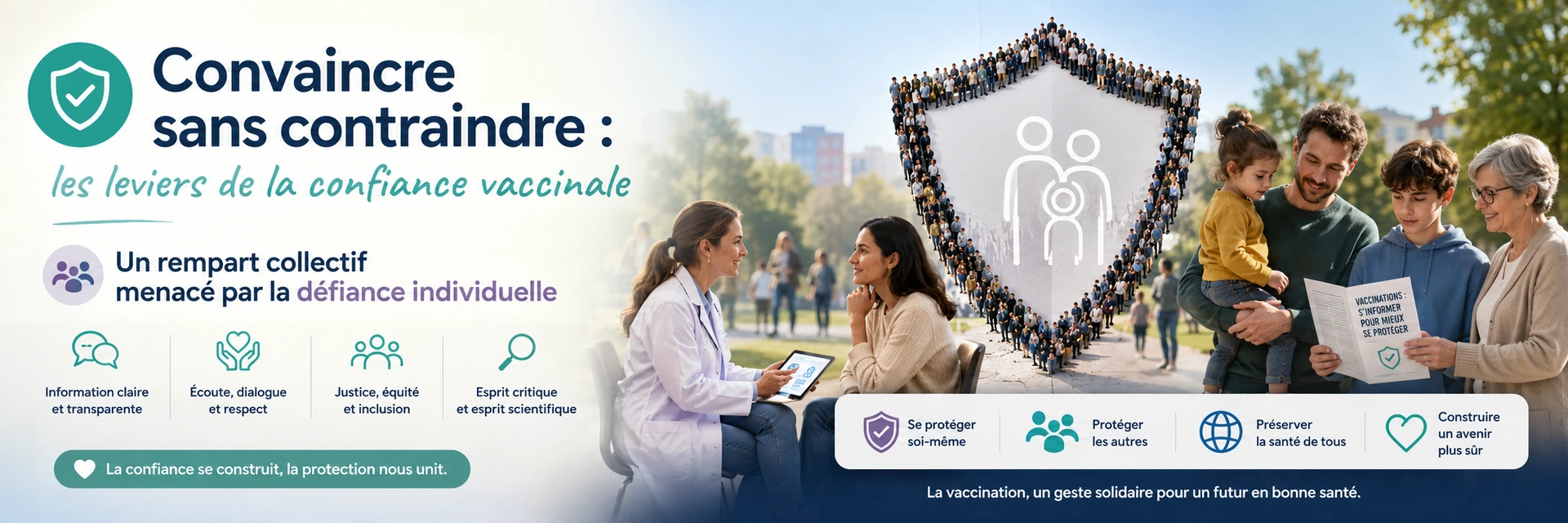
Convincing without coercion: the levers of vaccine confidence
A collective barrier threatened by individual distrust
Daniel Oberlé - Practices in Health - 13 June 2026
This article is based on the resources gradually referenced in the Practices in Health blog. This is a synthesis work, so it is necessary to consult all the sources in the bibliography to go further. Other publications dealing with this subject may enrich this selection and contribute to the updating of this page. You can propose your own articles by clicking on "Contact" at the top of the page.
The list of articles on this theme in Practices in Health is at the bottom of this article in the bibliography
We thank you in advance for helping us improve this document - Thank you for your comments and suggestions in the form at the bottom of the page
1. Introduction: why a file on vaccination?
Vaccination is one of the most effective and cost-effective public health prevention interventions. According to the World Health Organization (WHO), it saves approximately two million lives each year worldwide [3]. Over the last fifty years, it is estimated to have preserved at least 154 million lives, and global infant mortality has decreased by 40% over the same period[16]. By protecting both the vaccinated individual and the community, it reduces the circulation of infectious agents once sufficient vaccination coverage is achieved.
However, adherence to vaccination is never guaranteed. Distrust, disinformation and practical obstacles undermine vaccination coverage and expose us to the resurgence of diseases that were thought to be under control.
This document is aimed at professionals working with young people, families and groups distanced from the healthcare system. It offers a foundation of guidelines for :
understanding the individual and collective benefits of vaccination ;
identifying the current barriers to adherence ;
having access to recent regulatory and epidemiological guidelines ;
mobilising intervention levers that strengthen the agency of supported individuals[1].
It relies on institutional and scientific resources of reference (Inserm, Public Health France, the ministry responsible for Health, WHO, ECDC, National Cancer Institute), as well as practical tools that can be used in health education[2],[4]
2. Understanding vaccination: definitions and mechanisms
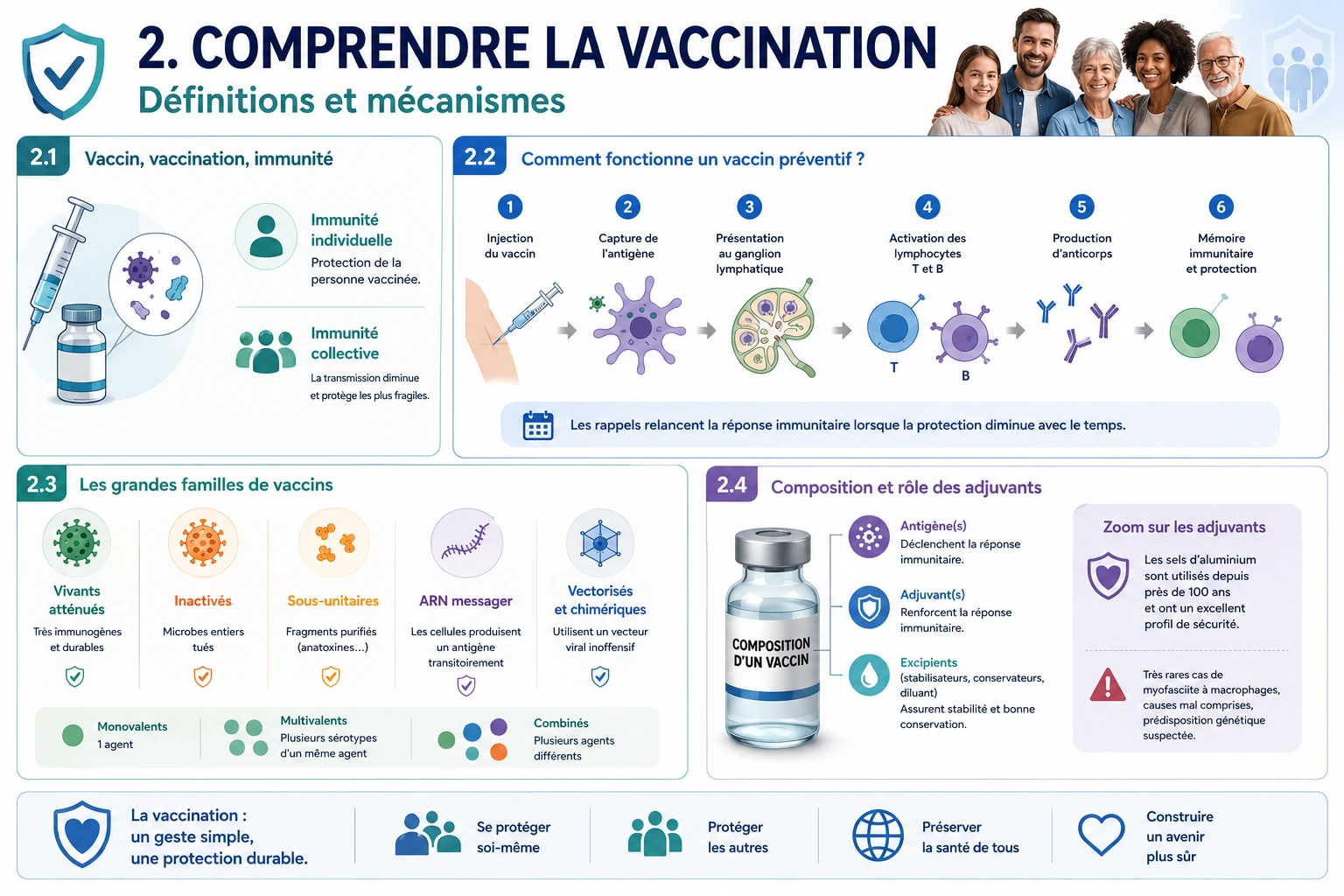
2.1. Vaccine, vaccination, immunity
Vaccinating, means presenting to the immune system of a healthy person a weakened or inactivated form of an infectious agent, one of its fragments, or the genetic material coding for one of its components. The objective is to trigger a protective immune response – without causing the disease – in order to prevent a subsequent infection or to limit its severity[3].
Vaccination allows for the development of memory cells (B and T lymphocytes) capable of quickly recognising the pathogen during a future exposure.
There are two levels of protection:
Individual immunity : the protection acquired by the vaccinated person.
Collective immunity (or herd immunity) : when a sufficient proportion of the population is immunised, the transmission of the pathogen decreases, which indirectly protects those who cannot be vaccinated (too young infants, immunocompromised individuals, medical contraindications)[3].
2.2. How a preventive vaccine works
The active ingredient of the vaccine, injected into the muscle or under the skin, is captured by antigen-presenting cells. These migrate to a nearby lymph node to present the vaccine antigens to lymphocytes. This encounter activates:
the killer T lymphocytes (cellular immunity),
the B lymphocytes that produce specific antibodies.
Memory cells (T and B) as well as antibodies then persist for several years, ensuring rapid and effective protection in case of a new encounter with the pathogen[3].
Vaccine efficacy varies according to the targeted microorganism, the vaccine technology used, and individual factors such as age or immune status.
The booster is an additional injection intended to boost the immune response when protection decreases over time. Most vaccines require one or more boosters. For influenza, vaccination is annual: this allows for adaptation to circulating viral strains and compensates for the short duration of the induced response[3].
2.3. The main families of vaccines
Several types of vaccines are distinguished, according to their mode of manufacture and composition:
| Family | Examples | Characteristics |
|---|---|---|
| Live attenuated vaccines | BCG, measles-mumps-rubella (MMR), chickenpox | Highly immunogenic, long-lasting protection. Contraindicated in immunocompromised individuals and pregnant women. |
| Inactivated vaccines (whole killed microbes) | Injectable influenza (some), injectable polio | No infectious risk. |
| Subunit vaccines (purified fragments, toxoids) | Tetanus, diphtheria, acellular pertussis | Well tolerated, but often require boosters and adjuvants. |
| Messenger RNA vaccines | Covid-19 (Comirnaty®, Spikevax®) | Cause the person's cells to transiently produce an antigen. Marketed at the end of 2020. |
| Chimeric or vector vaccines | Dengue, Covid-19 (viral vector vaccine), Ebola | Use a modified carrier virus to deliver the antigen. |
Furthermore, the following are distinguished:
Monovalent vaccines : target a single agent or serotype.
Multivalent vaccines : target several serotypes of the same agent (e.g. : 13-valent conjugate pneumococcal vaccine).
Combined vaccines : target several different agents (e.g. : MMR, DTPPolio-Hib)[3].
2.4. Composition and role of adjuvants
In addition to the antigen(s), a vaccine generally contains :
some stabilisers,
some preservatives,
a diluent,
and, except for live attenuated vaccines and mRNA vaccines, an adjuvant.
Role of the adjuvant : to enhance the immune response, allow for a smaller amount of antigen and provide longer-lasting protection.
The most commonly used adjuvant is aluminium salt, used since the 1920s and supported by a wealth of safety data. Very rare cases of macrophage myofasciitis have been associated with aluminium-containing vaccines, but the causes remain poorly understood; a genetic predisposition is suspected[3].
These factual clarifications about the composition of vaccines provide a useful counter-argument to the common concerns of the general public.
3. Individual and collective benefits
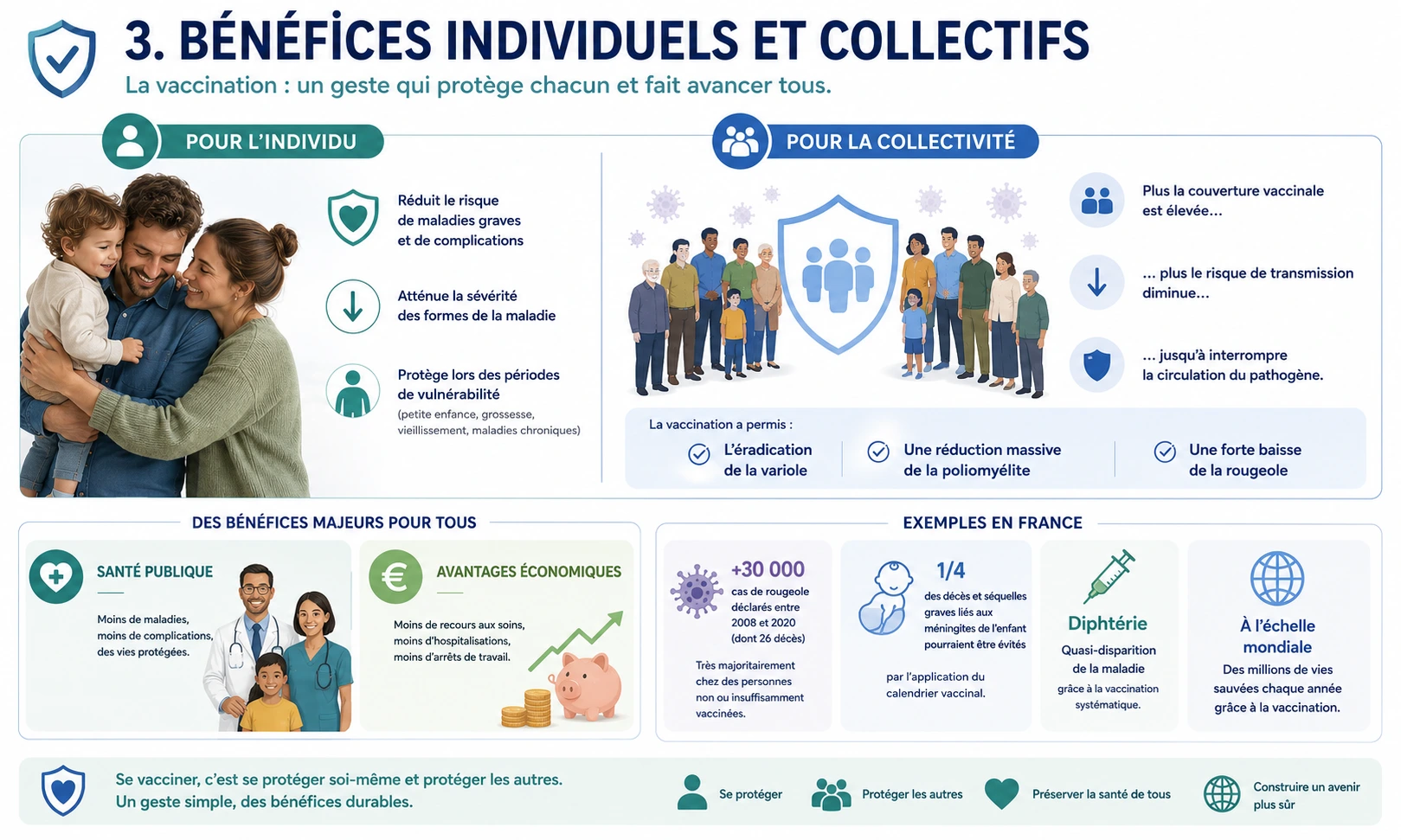
For the individual
Vaccination provides triple protection :
it significantly reduces the risk of contracting serious diseases or developing complications ;
she mitigates the severity of forms that occur nonetheless (phenomenon known as ‘attenuated vaccine failure’);
she protects during periods of increased vulnerability : early childhood, pregnancy, ageing, chronic diseases[3].
For the community
The higher the proportion of immunised individuals in a population, the lower the risk of transmission – up to interrupting the circulation of the pathogen. This collective strategy has enabled :
the eradication of smallpox ;
a massive reduction of poliomyelitis and measles on a global scale.
Health and economic benefits
Vaccination also generates benefits :
health : complications avoided, less pressure on emergency and intensive care services;
economic : reduction in the use of healthcare, hospitalisations and work absences.
Illustration with French examples
The importance of vaccination coverage objectives is clearly documented by several data in France :
Measles (2008-2019) : over 30,000 reported cases (including nearly 15,000 in 2011), resulting in 1,700 severe pneumonias, 42 neurological complications and 26 deaths, occurring mostly in individuals who were not or insufficiently vaccinated.
Childhood meningitis : a quarter of deaths and serious sequelae are deemed avoidable by strict adherence to the vaccination schedule.
Diphtheria : near-disappearance thanks to systematic vaccination[3].
On a global scale
The World Health Organization (WHO) regularly documents both the progress made and the persistent difficulties towards universal vaccination coverage[13][14].
4. Safety, adverse effects and pharmacovigilance
Most often mild and expected effects
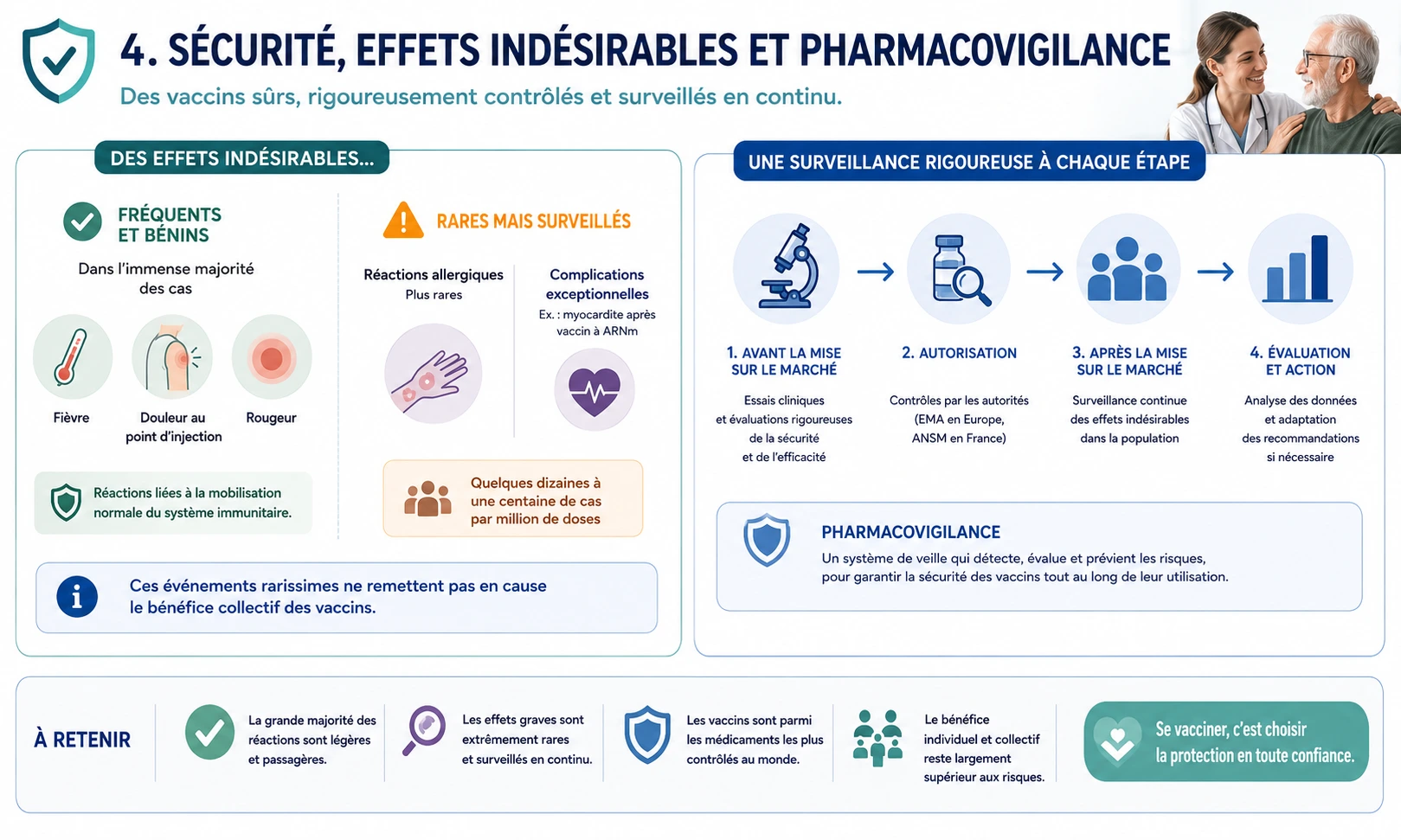
Like any health product, a vaccine can induce adverse effects. In the vast majority of cases, these are mild to moderate inflammatory reactions :
fever,
pain at the injection site,
local redness.
These manifestations are the normal expression of the mobilisation of the immune system ; they indicate the ongoing vaccine response and resolve spontaneously within a few days.
Rare, even exceptional effects
Allergic reactions (anaphylaxis) are rarer (around 1 to 5 cases per million doses depending on the vaccines).
Exceptional complications may occur, such as myocarditis after mRNA vaccination (a few dozens to a hundred cases per million doses, most often mild and resolving)[3].
These extremely rare events do not call into question the collective benefit of vaccination., but they justify prolonged monitoring of vaccinated populations and transparent information.
Continuous and rigorous monitoring
Vaccines are subject to rigorous controls :
before their market release (clinical trials, temporary or permanent authorisation) ;
after their marketing (pharmacovigilance).
Pharmacovigilance allows for a continuous monitoring for :
detecting rare adverse effects,
assessing their causality,
adjusting recommendations if necessary.
A key message to address concerns
Recalling the following distinction is an essential message to calmly address public concerns :
| Type of effect | Frequency | Severity |
|---|---|---|
| Frequent effects | Very frequent (>1/10) | Mild, transient |
| Rare effects | 1/1,000 to 1/10,000 | Moderate to severe, monitored |
| Exceptional effects | <1/10,000 to 1/1,000,000 | Rare, sometimes serious, but the collective benefit far outweighs the risk |
This distinction helps avoid two pitfalls: minimising real risks (transparency) and amplifying exceptional risks (alarmism)[3].
5. The vaccination framework in France
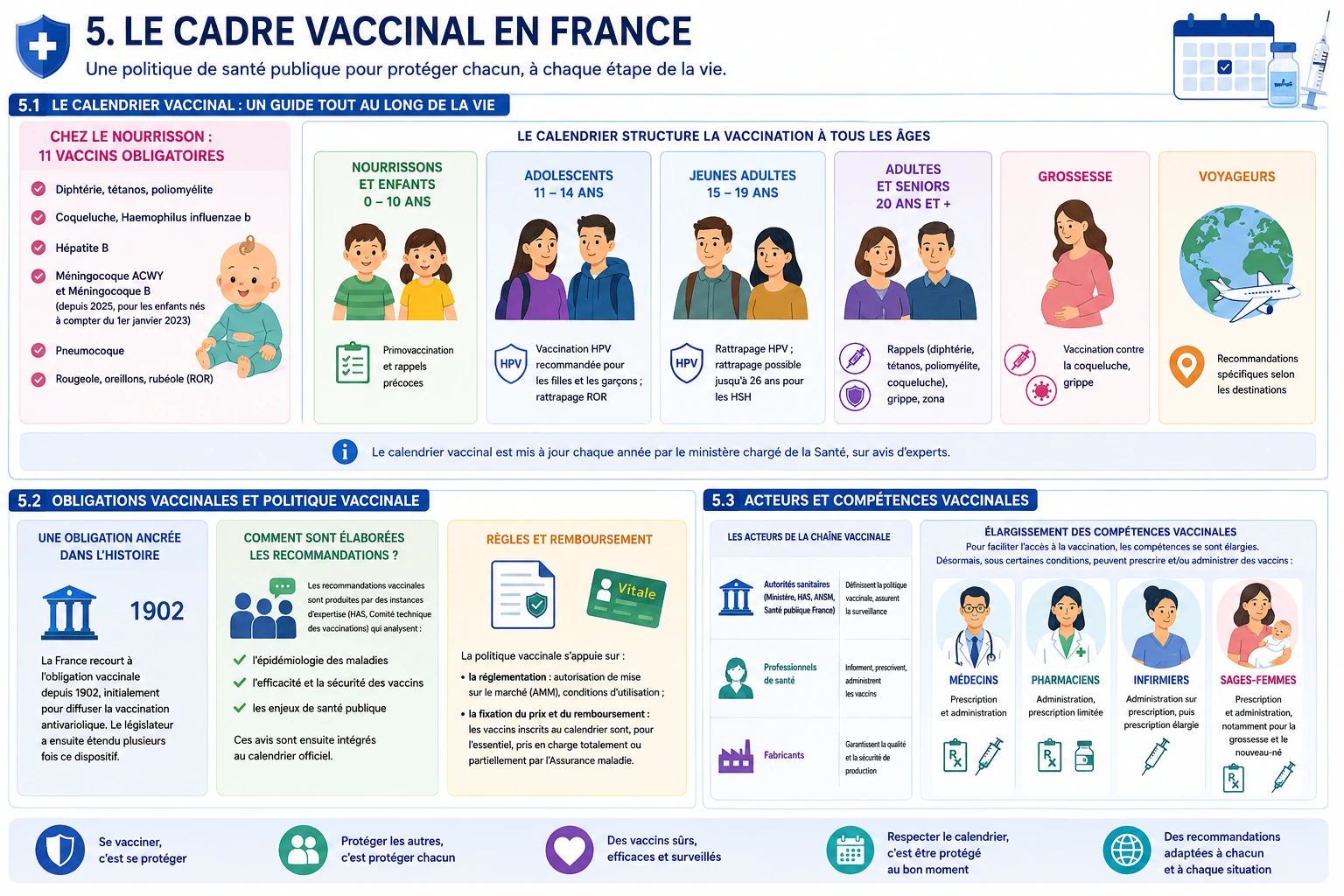
. Vaccination schedule and vaccination recommendations 2026 (April 2026) — Ministry of Health
https://sante.gouv.fr/IMG/pdf/calendrier_vaccinal-2026_a4_100p.pdf
5.1. The vaccination schedule: a guide throughout life
Every year, the Ministry of Health publishes the update of the vaccination schedule. This reference document sets, by age and situation, the vaccines recommended or mandatory – for the general population as well as for specific situations (immunocompromised individuals, pregnant women, travellers)[15].
For infants: 11 mandatory vaccines
Since 2018, vaccination requirements apply to infants for the following diseases[3] :
| Mandatory vaccines for infants |
|---|
| Diphtheria, tetanus, poliomyelitis |
| Whooping cough, Haemophilus influenzae b |
| Hepatitis B |
| Meningococcal ACWY and Meningococcal B (from 2025, for children born on or after 1 January 2023) |
| Pneumococcus |
| Measles, mumps, rubella (MMR) |
The schedule structures vaccination at all ages
Infants and children : primary vaccination and early boosters.
- Adolescents (11-14 years) : HPV vaccination recommended for girls and boys; MMR catch-up.
- Young adults (15-19 years) : HPV catch-up; catch-up possible up to 26 years for men who have sex with men (MSM)
Adults and seniors : boosters (diphtheria, tetanus, poliomyelitis, whooping cough), flu, shingles.
Pregnancy : vaccination against whooping cough, flu (and depending on choice, RSV vaccination)
Travellers : specific recommendations depending on destinations.
Against infant bronchiolitis, two solutions exist: discuss it with the midwife or doctor during pregnancy
5.2. Vaccination obligations and vaccination policy
France has been using the vaccination obligation since 1902, initially to promote smallpox vaccination. The legislator has since extended this system several times[7].
How are recommendations developed?
Vaccination recommendations are produced by expert bodies (High Authority of Health, Technical Vaccination Committee) that analyse:
the epidemiology of diseases,
the effectiveness and safety of vaccines,
public health issues.
These opinions are then integrated into the official schedule[17].
Rules and reimbursement
The vaccination policy is based on:
the regulation : marketing authorisation (MA), conditions of use;
the setting of prices and reimbursement : the vaccines listed in the schedule are, for the most part, covered fully or partially by Health Insurance.
5.3. Actors and vaccination competencies
Several categories of actors are involved in the vaccination chain:
| Actors | Main roles |
|---|---|
| Health authorities (Ministry, HAS, ANSM, Public Health France) | Define vaccination policy, ensure surveillance |
| Health professionals | Inform, prescribe, administer vaccines |
| Manufacturers | Ensure quality and safety of production |
Expansion of vaccination competencies
To facilitate access to vaccination, competencies have been expanded. Now, under certain conditions, can prescribe and/or administer vaccines:
Doctors (prescription and administration)
Pharmacists (administration, limited prescription)
Nurses (administration on prescription, then expanded prescription)
Midwives (prescription and administration, particularly for pregnancy and newborns)
This point is useful for guiding the public towards « who vaccinates whom » and removing access barriers[17].
6. Assessment of vaccination coverage in France (April 2026)
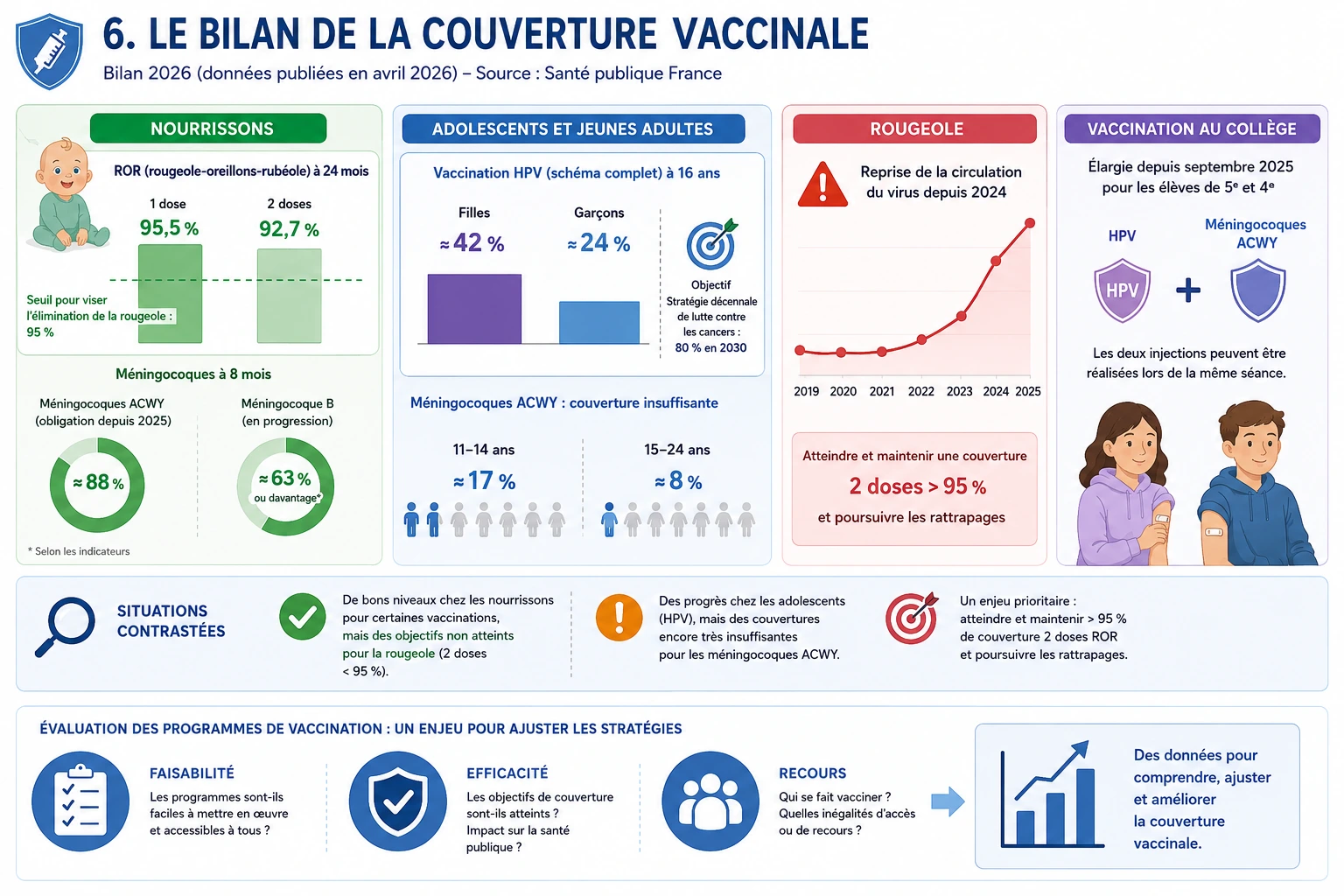
Source: Public Health France[16]
Contrasting situations depending on ages and vaccines
Among infants
| Indicator | Coverage | Threshold / Objective |
|---|---|---|
| MMR – 1st dose at 24 months | 95.5 % | ✅ achieved |
| MMR – 2 doses at 24 months | 92.7 % | ❌ below the threshold of 95 % required for the elimination of measles |
| Meningococci ACWY (requirement introduced in 2025) – at 8 months | nearly 88 % | Notable progress |
| Meningococcus B – at 8 months | approximately 63 % | Strong progress |
Among adolescents and young adults
| Indicator | Coverage | Objective |
|---|---|---|
| HPV (complete schedule at 16 years) – girls | ≈ 42 % | Objective 2030: 80 % (Decadal strategy to combat cancers) |
| HPV (complete schedule at 16 years) – boys | ≈ 24 % | Same |
| Meningococci ACWY (11–14 years) | ≈ 17 % | Very insufficient |
| Meningococci ACWY (15–24 years) | ≈ 8 % | Very insufficient |
Measles: a warning to take seriously
The resurgence of the virus since 2024 highlights the urgency of achieving and maintaining a two-dose coverage above 95 %, and actively pursuing vaccination catch-ups.
Strengthening access: vaccination in schools
To improve coverage, the school vaccination campaign has been expanded:
Initially : focused on HPV for Year 5 and Year 6 students.
Since September 2025 : extension to vaccination against the meningococci ACWY.
Method : both injections (HPV and meningococci ACWY) can be administered during the same session[16].
Methodological issue: evaluation of programmes
The evaluation of vaccination programmes – under its three dimensions feasibility, effectiveness and utilisation – is a crucial methodological issue for adjusting these strategies[8].
7. Vaccine hesitancy: understanding the barriers to act better
7.1. Definition and scope
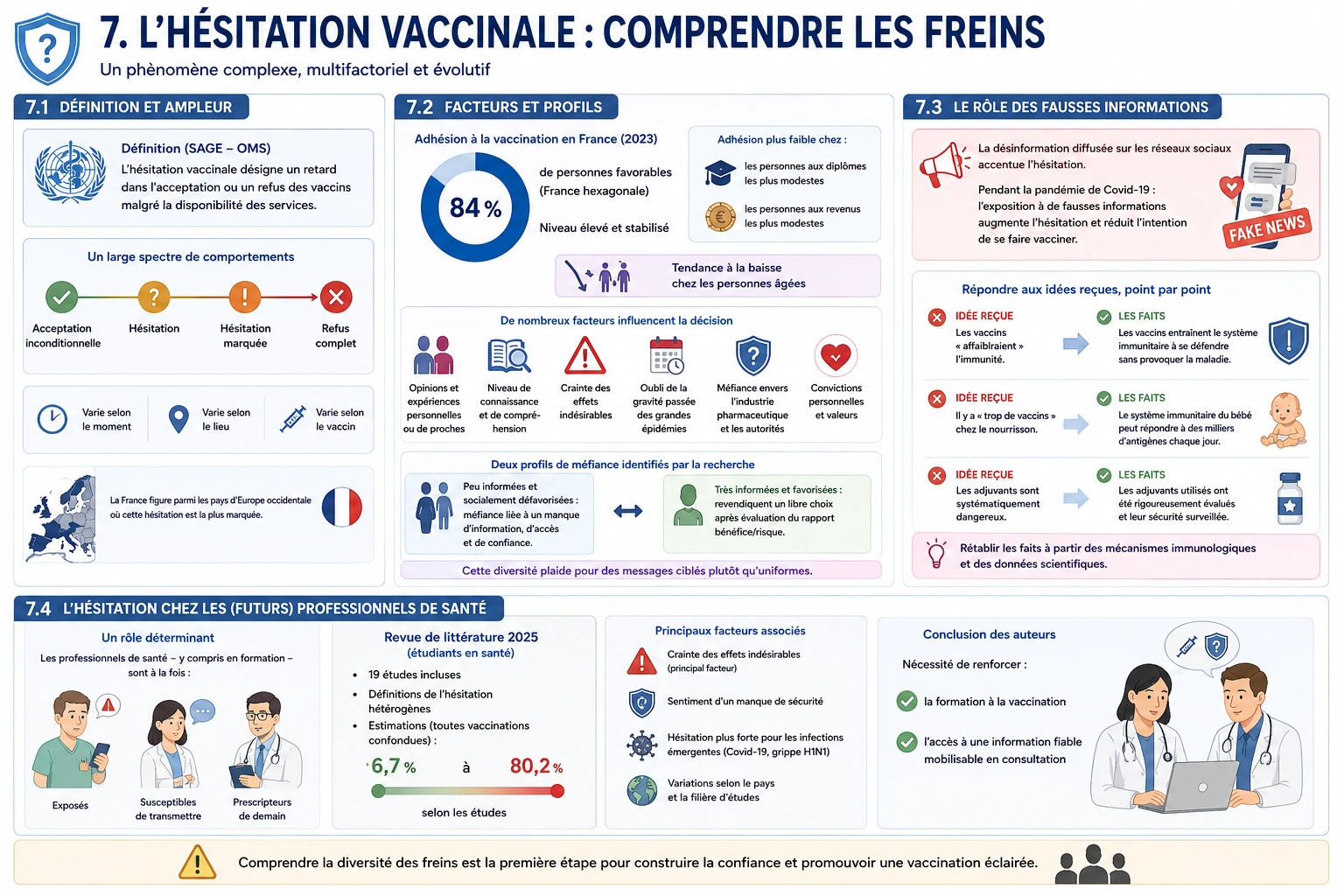
Definition (WHO) : vaccine hesitancy refers to a delay in acceptance or a refusal of vaccines despite the availability of vaccination services. It lies on a continuum, between unconditional acceptance and complete rejection, and varies according to the time, place, and vaccine considered[6],[7].
Situation in France : our country is among those in Western Europe where vaccine hesitancy is most pronounced.
7.2. Factors and profiles: a nuanced reality
Level of adherence in France (Public Health France Barometer, 2023)
84 % of people in mainland France declare themselves in favour of vaccination – a high and stabilised level.
But adherence is weaker among:
people with the lowest qualifications or incomes,
and is trending downwards among older people[7].
The multiple influencing factors
The vaccination decision is the result of a set of factors:
| Category | Examples |
|---|---|
| Personal experiences or those of close ones | Experience of an adverse effect, family history |
| Knowledge and understanding | Health literacy level, access to scientific information |
| Specific fears | Fear of side effects, adjuvants, the number of vaccines |
| Perception of diseases | Forgetting the past severity of major epidemics (measles, polio) |
| Institutional mistrust | Distrust of the pharmaceutical industry or health authorities |
| Personal beliefs | Religious, philosophical values, or choice of "natural" |
Two opposing distrust profiles
Research shows two main profiles[3] :
Poorly informed and socially disadvantaged individuals : barriers related to access, understanding, trust in institutions.
Well-informed and advantaged individuals : claim a free informed choice after personal assessment of the benefit/risk ratio.
Operational conclusion : this diversity advocates for targeted messages rather than uniform ones, and for a personalised approach according to the profile.
7.3. The role of false information (disinformation)
Disinformation, particularly on social media, exacerbates vaccine hesitancy.
During the Covid-19 pandemic, it was shown that exposure to false information increased hesitancy and reduced the intention to get vaccinated[7].
Effective strategy : rather than an isolated "fake news" section, institutional resources respond point by point to misconceptions, restoring the facts based on immunological mechanisms.
Examples of misconceptions addressed :
"Vaccines would weaken natural immunity"
"There are too many vaccines for infants"
"Adjuvants are systematically dangerous"
→ Response: scientific recontextualisation[3].
7.4. Hesitancy among (future) health professionals
A strategic issue
Health professionals – including those in training – play a decisive role :
they themselves are exposed to hesitancy,
they can transmit (or reduce) it to patients,
they are the prescribers of tomorrow.
Data from a literature review (2025)
A review covering 19 studies among health students found[6] :
| Indicator | Result |
|---|---|
| Extent of hesitancy (all vaccines) | from 6.7 % to 80.2 % according to the studies – high heterogeneity |
| Main associated factor | Fear of side effects and a feeling of lack of safety |
| Variations by vaccine | Higher hesitancy for emerging infections (Covid-19, H1N1 flu) |
| Geographical and sectoral variations | According to the country and the specialty studied |
Authors' conclusion
The authors call for :
strengthening training in vaccination within health curricula,
improving access to reliable information and directly mobilisable in consultation.
8. Acting in health promotion: levers and strategies
8.1. The BeSD framework: understanding behavioural and social determinants
A finding : telling people what they "should" do is not enough to sustainably change their behaviours.
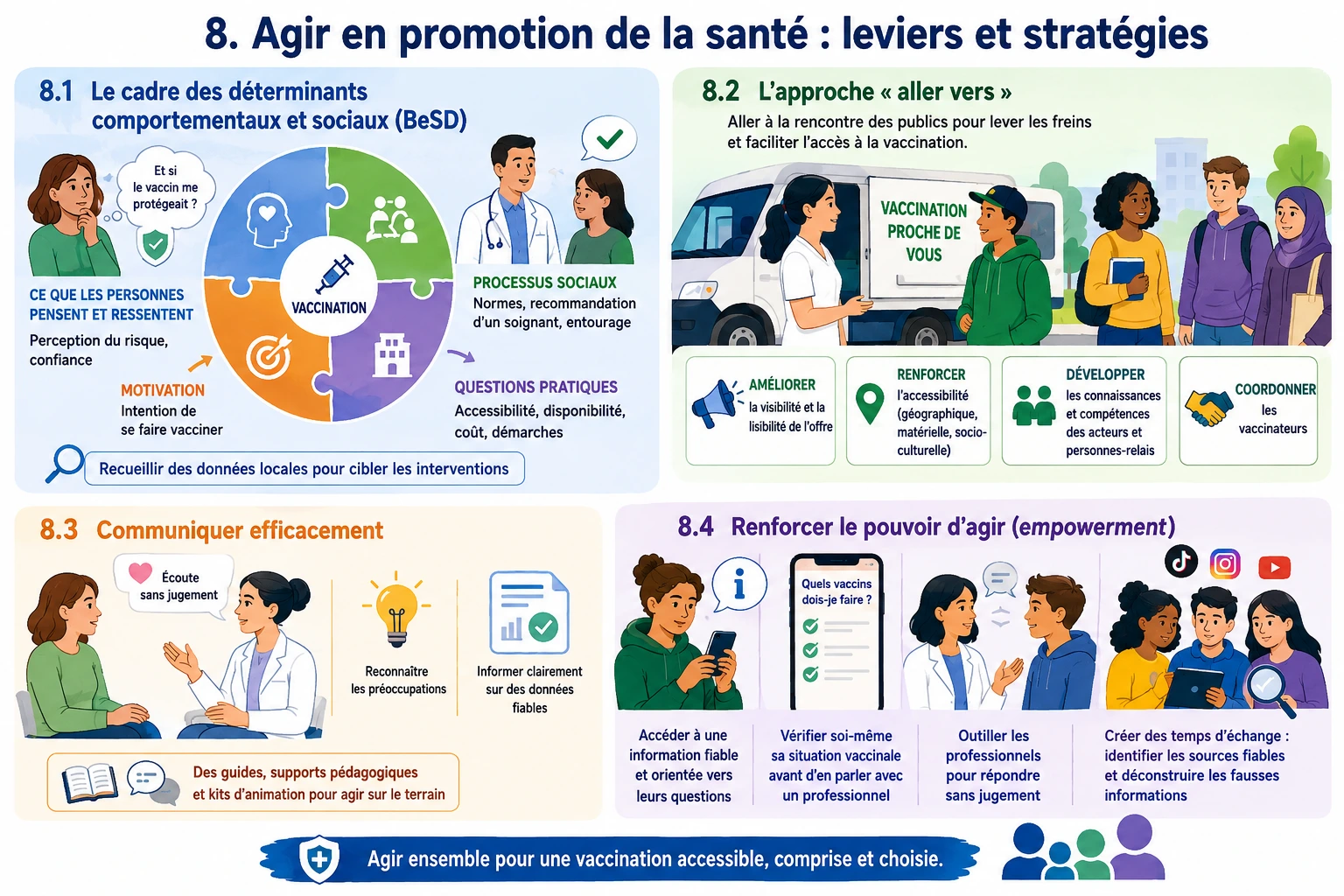
The response : WHO and ECDC promote an approach based on the social and behavioural sciences, structured around the BeSD (Behavioural and Social Drivers of Vaccination), adapted from the model by Brewer et al. (2017)[9,11].
The four action areas of the BeSD framework
| Area | Examples of questions to explore |
|---|---|
| What people think and feel | Risk perception, trust in vaccines and authorities, specific fears |
| Social processes | Social norms, recommendation from a healthcare professional, opinions of peers |
| Motivation | Actual intention to get vaccinated (vs stated intention) |
| Practical questions | Geographical accessibility, availability of appointments, cost, complexity of procedures |
Concrete application : le cadre BeSD invite à recueillir des données locales (entretiens, questionnaires) pour adapter les interventions aux freins réellement identifiés sur le terrain.
8.2. L’approche « aller vers » : lever les freins pour les publics éloignés
Pour les personnes les plus éloignées du système de santé, l’approche « aller vers » consiste à supprimer les obstacles relatifs à :
l’offre de vaccination,
ses acteurs,
l’environnement social,
et les comportements individuels.
D’après une analyse de la littérature, voici des leviers concrets actionnables[1] :
| Levier | Exemples d’actions |
|---|---|
| Améliorer la visibilité et la lisibilité de l’offre | Affiches dans les lieux de vie, information en plusieurs langues |
| Renforcer l’accessibilité | Permanances hors les murs, bus vaccinaux, horaires élargis, interprétariat |
| Développer les connaissances et compétences des acteurs-relais | Formation des médiateurs en santé, éducateurs pairs, travailleurs sociaux |
| Coordonner les vaccinateurs | Organisation de séances communes (infirmiers, pharmaciens, médecins) sur un même lieu |
8.3. Communiquer efficacement : écouter, reconnaître, informer
Une communication réussie repose sur trois piliers :
L’écoute sans jugement : accueillir les doutes et les récits personnels.
La reconnaissance des préoccupations : validate the emotion without necessarily validating the factual content (e.g. : "I understand that you are asking this question").
Clear and data-driven information : respond with facts, without jargon.
Guides aimed at professionals provide benchmarks for conducting these exchanges and supporting decision-making[10,12].
Practical tools : educational materials and facilitation kits make it easier to implement workshops and field interventions[2,4].
8.4. Strengthening empowerment
The goal is to enable young people and families to become active participants in their own vaccination health. Several complementary levers:
| Levier | Description |
|---|---|
| Access to reliable and targeted information | Answering people's specific questions (and not generalities) |
| Self-checking of vaccination status | Encouraging the use of tools like "Which vaccines should I have?" (MesVaccins.net, electronic vaccination record integrated into My health space.) before an exchange with a professional |
| Equipping professionals | Training in non-judgmental responses, reformulation, and emotion management |
| Workshops on critical media education | Organise exchange sessions where young people confront the information seen on social media with validated data, working on the identification of reliable sources and the deconstruction of false information |
8.5. Prebunking and debunking: a method for addressing misinformation
The previous sections established the principle of listening communication, without judgment (8.3). It is also necessary to have a method to intervene in the face of specific misinformation. Two complementary approaches, documented by the Pan American Health Organization (PAHO/WHO), structure this intervention[18],[19] :
- the prebunking (prebunking) : it intervenes before exposure to misinformation. Just as a vaccine “immunises” against a pathogen, it prepares the person to recognise misinformation before they encounter it. It remains partially effective, termed “therapeutic”, for individuals already exposed but who do not yet fully adhere to the misleading message;
- the debunking (debunking) : it seeks to correct misinformation that is already established and to replace it with the verified fact. The longer the time between exposure and refutation, the more the error becomes entrenched in memory and becomes difficult to rectify.
For a long time, there was a fear that debunking would do more harm than good, by re-exposing the public to misinformation. Recent research shows that this fear is unfounded : it is preferable to systematically resort to debunking, provided that its process is respected[18],[19].
The process in four stages
Whether it is defused or demystified, the framework is the same. It always places the established fact first and last, by “framing” the mention of the myth :
- First state the fact that you want to see remembered, in a simple and clear way.
- Warn and qualify the myth : alert that false information is circulating, present a “weakened” version (general idea, without going into details) and indicate explicitly that it is false.
- Explain why it is false: provide the evidence, and indicate, if necessary, the manipulation tactic used (see the table below).
- Repeat the established fact, to conclude with the correct information.
Point of vigilance. It is unnecessary, even counterproductive, to react to false information that is unlikely to spread: one risks drawing attention to it. Social listening (monitoring of networks, feedback from field professionals) helps to distinguish the rumours that will die down from those that deserve a response[19].
Recognise the tactics of misinformation
Understanding how false information is manufactured allows it to be spotted more quickly and better explained to the public. These tactics, identifiable by all, constitute a directly mobilisable resource in critical media education workshops (see 8.4)[18],[19] :
| Tactic | Typical example |
|---|---|
| Elicit strong emotions (fear, anger, disgust, sadness, feeling of superiority) | « A healthy baby dies a few months after being vaccinated. » |
| Resorting to conspiracy theories to explain everything or denigrate a group | « Laboratories invented this virus to sell more vaccines. » |
| Pretending to be an expert (fake accounts imitating health authorities) | Profile with a name and photo similar to a known scientist |
| Inventing "experts" or studies to give an appearance of credibility | « Dr. So-and-so showed that vaccines lower IQ by 10 points. » |
| Setting an impossible standard to achieve | « As long as a vaccine is not safe and effective at 100%, it should not be used. » |
| Appealing to nature | « Natural immunity is always better than vaccine immunity. » |
| Using false logic (correlation taken for causation) | « My neighbour was vaccinated against the flu and still caught it: the vaccine is useless. » |
| Relying on anecdote rather than on data | « The neighbour's son was vaccinated, then he was diagnosed with autism… » |
| Distorting accurate information (technically true, but taken out of context) | « A "healthy" doctor died two weeks after his vaccination. » |
| Discrediting or polarising (attacking experts, politicising the issue) | « Why listen to him? Laboratories pay him to promote vaccines. » |
Care for the tone and content
The guides remind us of a few communication principles, in line with the listening approach outlined in 8.3[19] :
- criticise the data and arguments, never the person : who feels attacked becomes defensive and is no longer willing to learn ;
- avoid fear-based tactics, often counterproductive in terms of vaccination, and favour testimonies ;
- rely on trusted messengers and close to the public : health workers, local intermediaries, scientific community perceived as neutral ;
- do not sacrifice one vaccine to defend another : for example, refute a rumour about mRNA vaccines without implying that live vaccines would be, in turn, dangerous ;
- link any data to the existing scientific consensus on the safety and efficacy of vaccines, rather than presenting an isolated result.
Concrete application. Interactive debunking tools (online games such as Bad News, Go Viral!, Harmony Square, Cranky Uncle) allow for playful learning to recognise these tactics. Most are in English, but translatable into group animation[18].
Adaptation to the Francophone context. The OPS guides address the Americas Region and refer to Anglo-Saxon verification organisations (Snopes, PolitiFact, BBC Verify, FactCheck.org). For a French-speaking audience, we will usefully rely on their equivalents : l'AFP Factuel, the Décodeurs / the Décodex of Monde, or even the section " True or False " of Franceinfo.
9. Key messages for young people and their families
Some messages, convertible into visual supports (posters, infographics, short formats) :
« Vaccines help prevent diseases that can be serious, even when they have become rare. »
« Getting vaccinated is protecting yourself, but also protecting the vulnerable people around you. »
« The vaccination schedule indicates the vaccines recommended at each age; it is updated regularly according to scientific knowledge. »
« The vaccines used in France are subject to strict controls, before and after their market release. »
« In case of doubt, talk to a healthcare professional: they can check if your vaccinations are up to date and answer your questions. »
For those aged 11–26, targeted messages can emphasise measles catch-up, HPV vaccination (protection against certain cancers, facilitated by the campaign in schools) and checking vaccination status before travel [5]. Co-constructing these messages with young people enhances ownership.
10. Resources and practical tools
To deepen and animate interventions, the file refers to the following resources (notable references in the bibliography) :
Reference files: Inserm (ref. 3), Public Health France (ref. 16), vaccination schedule 2026 (ref. 15).
Frameworks and action guides: ECDC (ref. 9), WHO BeSD (ref. 11), RMTC communication (ref. 10), playbook PATH/Busara (ref. 12).
Teaching tools: file "180 minutes" (ref. 2), CAPSule (ref. 4), HPV memo INCa (ref. 5).
Promotion and "going towards": Health Promotion BFC (ref. 1).
Bibliography
The numbers below correspond to the superscript numbers cited in the text. Titles and addresses (URLs) are provided in plain text.
1. "Going towards" vaccination: strategies and intervention levers in health promotion — Health Promotion Burgundy-Franche-Comté
2. A round-up of vaccination in health promotion… in 180 minutes (or almost) — Documentary file, 54 p., RRAPPS-BFC
3. Vaccines and vaccinations — Inserm file, "Science for Health"
https://www.inserm.fr/dossier/vaccins-et-vaccinations/
4. The CAPSule activity binder — Special Vaccination and COVID-19, ARS Centre-Val de Loire / FRAPS
5. Vaccination against HPV: the essentials in 8 key points for children — National Cancer Institute
6. Vaccine hesitancy among health students: a literature review — Public Health, 2025/2, vol. 37, p. 57-71 (Luyt D. et al.)
https://stm.cairn.info/revue-sante-publique-2025-2-page-57
7. Why does vaccination encounter so much scepticism? — The Conversation
https://theconversation.com/pourquoi-la-vaccination-rencontre-t-elle-tant-de-scepticisme-247475
8. Evaluation of the feasibility and effectiveness of a vaccination programme — Public Health France
https://www.santepubliquefrance.fr/sites/default/files/rdd/document/782783_spf00005623.pdf
9. Tools and methods to promote vaccine acceptance and vaccination rates: a social and behavioural sciences-based approach — ECDC
10. Communicating effectively with the patient about vaccination — Report on communicable diseases in Canada (RMTC / CCDR)
11. Behavioural and social drivers of vaccination: tools and practical guidance for achieving high uptake — World Health Organization
https://www.who.int/publications/i/item/9789240049680
12. Playbook " Vaccine Hesitancy: how to approach it? " — PATH / Busara (2024, French version)
https://busara.global/wp-content/uploads/2024/07/PATH-Playbook-French.pdf
13. Global strategies and practices for systematic vaccination (GSPSV) — World Health Organization
https://iris.who.int/server/api/core/bitstreams/ff884651-ed74-4033-a892-27ec0d839784/content
14. Progress made and challenges encountered in achieving universal vaccination coverage — World Health Organization
15. Vaccination schedule and vaccination recommendations 2026 (April 2026) — Ministry of Health
https://sante.gouv.fr/IMG/pdf/calendrier_vaccinal-2026_a4_100p.pdf
16. Vaccination of children, adolescents and young adults in France — Assessment of vaccination coverage in 2025 (April 2026) — Public Health France
https://www.santepubliquefrance.fr/sites/default/files/2026-04/bullnat_vaccination_20260427.pdf
17. Vaccination policies — laws and decrees — Vaccination Info Service (professional space)
18. Combatting misinformation about vaccines: Guide for teachers — Pan American Health Organization (PAHO/WHO), Washington D.C., 2026 (PAHO/CIM/25-0008). Under Creative Commons CC BY-NC-SA 3.0 IGO. - https://iris.paho.org/items/01831424-f3a6-4f4e-aa0a-24388eb32f6c
19. Combatting misinformation about vaccines: Guide for teams responsible for risk communication and community engagement — Pan American Health Organization (PAHO/WHO), Washington D.C., 2026 (PAHO/CIM/25-0013). Under Creative Commons CC BY-NC-SA 3.0 IGO. Includes two useful annexes: advice for journalists and advice for content creators. https://www.paho.org/fr/documents/lutter-contre-les-fausses-informations-sur-les-vaccins-guide-pour-les-equipes-chargees
#Vaccination #Vaccines #HealthPrevention #PublicHealth #VaccinateToProtect #IGetVaccinated #IProtectUs #VaccinesWork #HumanlyPossible #VaccinationCoverage
N.B. : Chaque article est produit à partir de mon expérience de terrain, en combinant lecture critique et traitement par intelligence artificielle (Perplexity, NotebookLM and Claude). The prompts are specifically constructed for each type of use, and the models operate only from the transmitted source (that of the blog) — without resorting to external knowledge or extrapolation.
We thank you in advance for helping us improve this document - Thank you for your comments and suggestions
Comments:
MB: A fairly comprehensive file - If we already knew all this, that would be great. A comment: in the past, vaccines were promoted in an economic logic of cost/effectiveness, currently they are promoted, it seems to me, in a logic of reducing the "loss of opportunity" or risk-taking. The concepts are not quite the same.
- Response: Indeed, in the past, we got vaccinated out of duty, to protect everyone. Today, the message is mainly directed at each individual: "don't miss your chance to protect yourself." The problem is that a vaccine protects precisely because many people do it together. By saying too much "think of yourself", we risk forgetting this "togetherness" that gives it all its strength. For young people, it is therefore better to explain vaccination as an act that we also do for others, not just for ourselves.